Nobody plans for a power outage, a storm, or an unexpected evacuation but the families who handle these moments best are almost always the ones who prepared before they needed to.
That’s the entire purpose of the Home Emergency Supply List printable pack: a clear, organized way to build and maintain the supplies your household needs when the unexpected happens, without the panic of scrambling at the last minute.
This set is designed for households of every size, including families with kids, pets, and multiple generations under one roof.
It turns emergency preparedness from a vague, anxiety inducing idea into a series of manageable checklists you can complete over a weekend and revisit regularly.
Why Emergency Preparedness Deserves a Real System
Most people know, in the back of their mind, that they should have supplies ready for emergencies.
Few actually get around to it, mostly because the task feels overwhelming without structure.
What exactly do you need? How much? Where should it be stored? A checklist answers all of that instantly, breaking an intimidating project into small, checkable steps.
There’s also a real psychological benefit to being prepared. Knowing your family has water, food, medical supplies, and a plan in place reduces anxiety when something actually does happen.
Preparedness isn’t about assuming disaster it’s about removing one more thing to worry about during an already stressful moment.
In that sense, it fits alongside other quiet forms of household care, like a Home Maintenance Checklist that keeps a home running smoothly, or a Self Care Checklist for Mental Health that keeps you personally steady preparedness for your space and preparedness for yourself go hand in hand.
What’s Included in the Pack
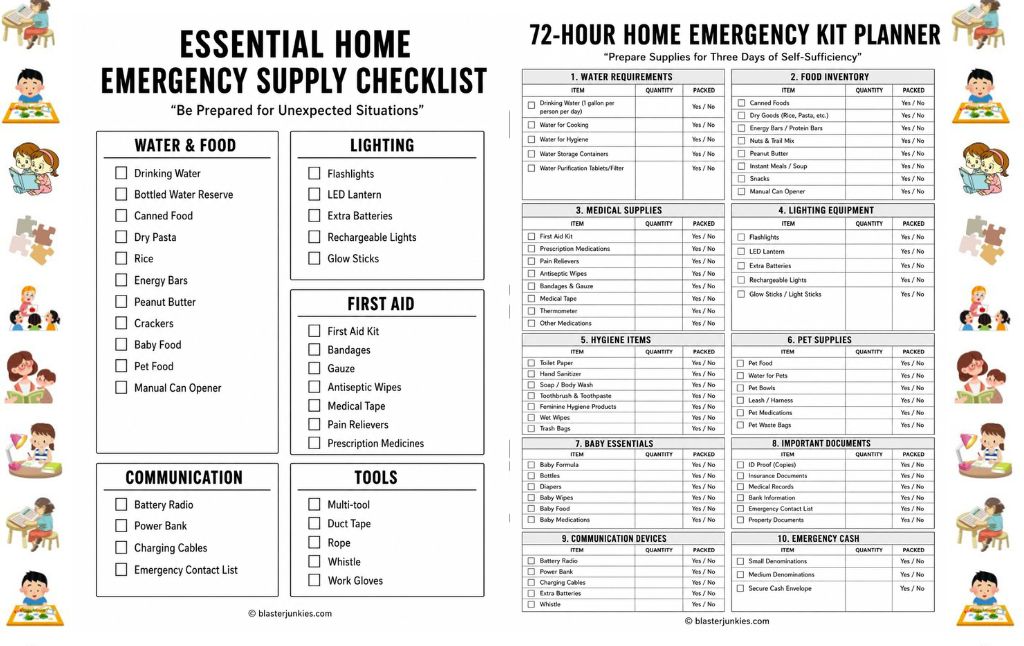
Rather than a single overwhelming master list, this printable set breaks emergency preparedness into focused, digestible checklists.
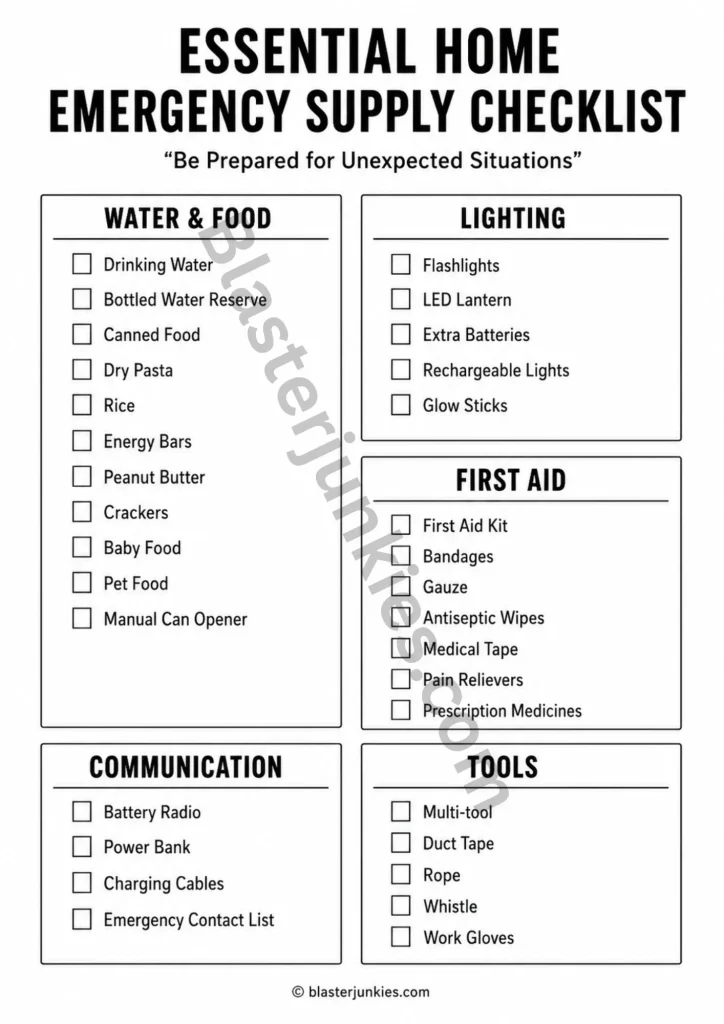
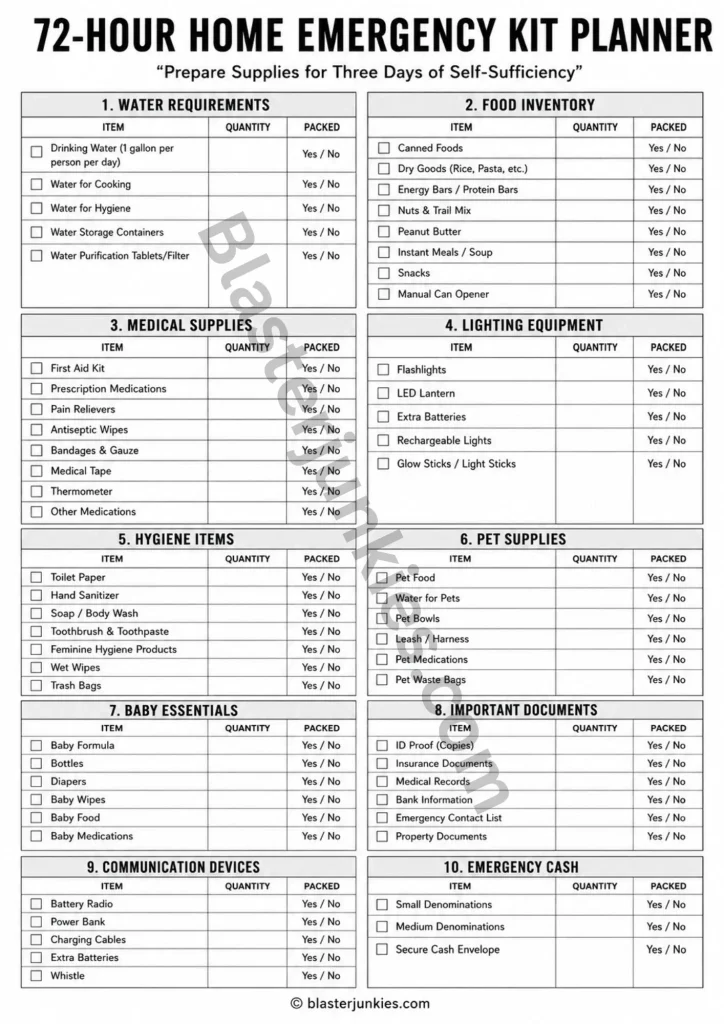
There’s a foundational essentials checklist covering the basics water, food, lighting, first aid, communication, and tools plus a detailed 72 hour kit planner for building a self sufficient supply for short term emergencies.
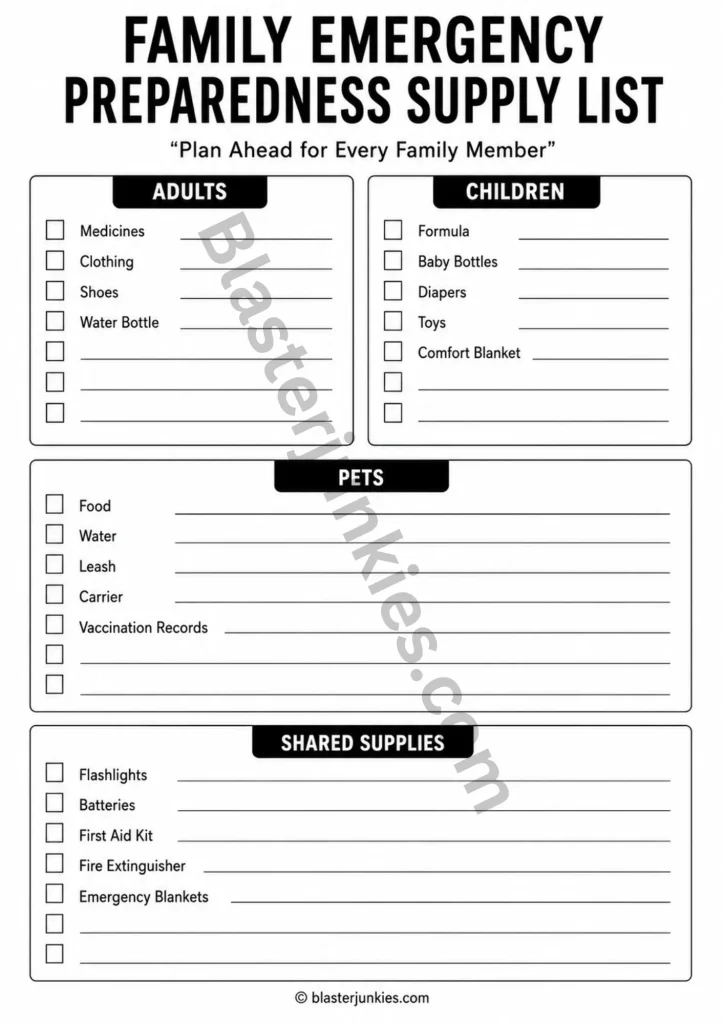
For families, there’s a dedicated preparedness list organized by household member, including sections for adults, children, and pets.
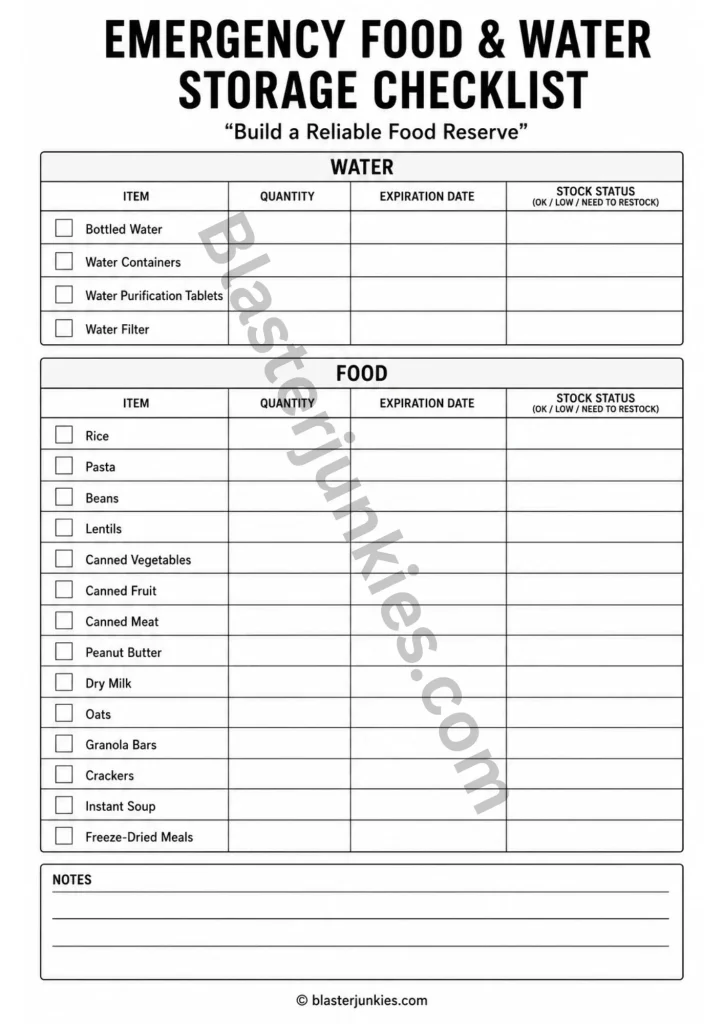
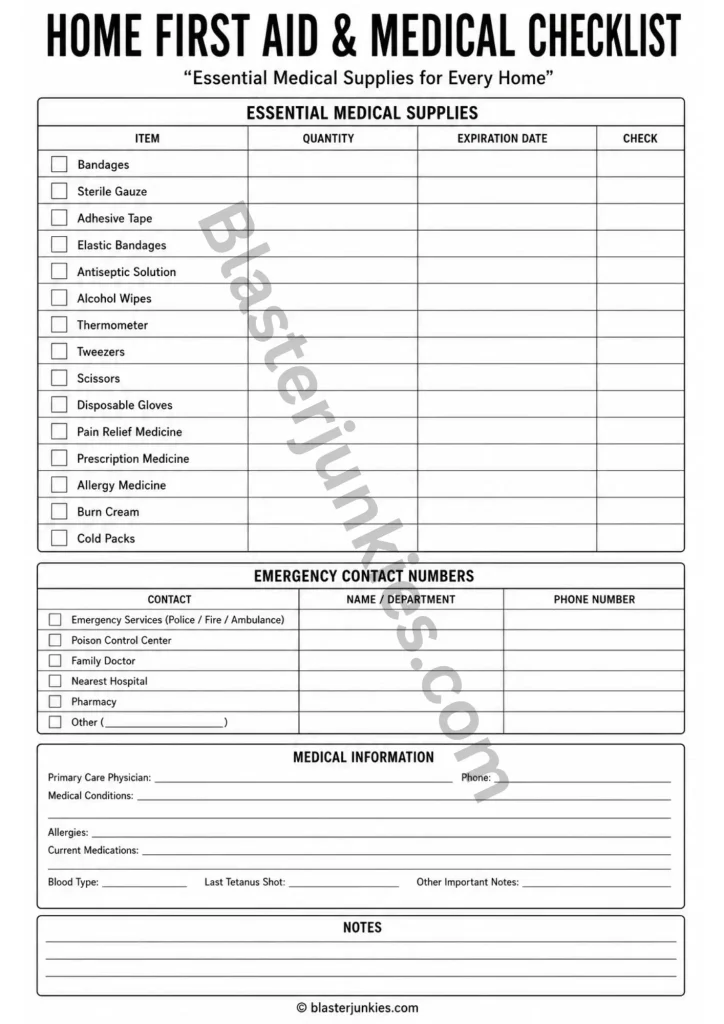
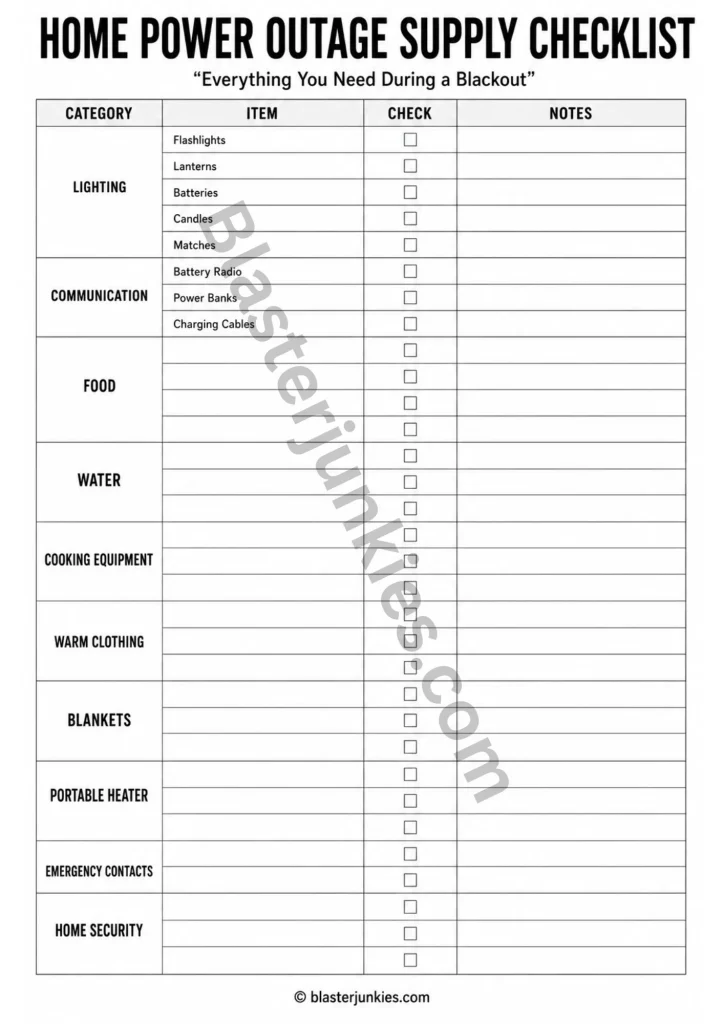
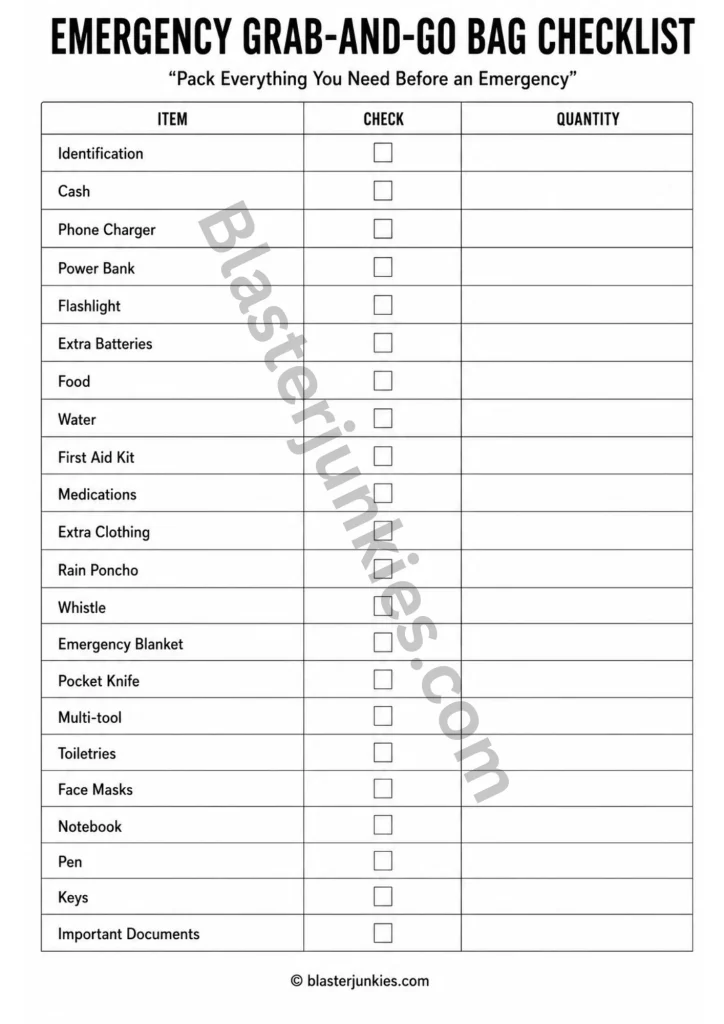
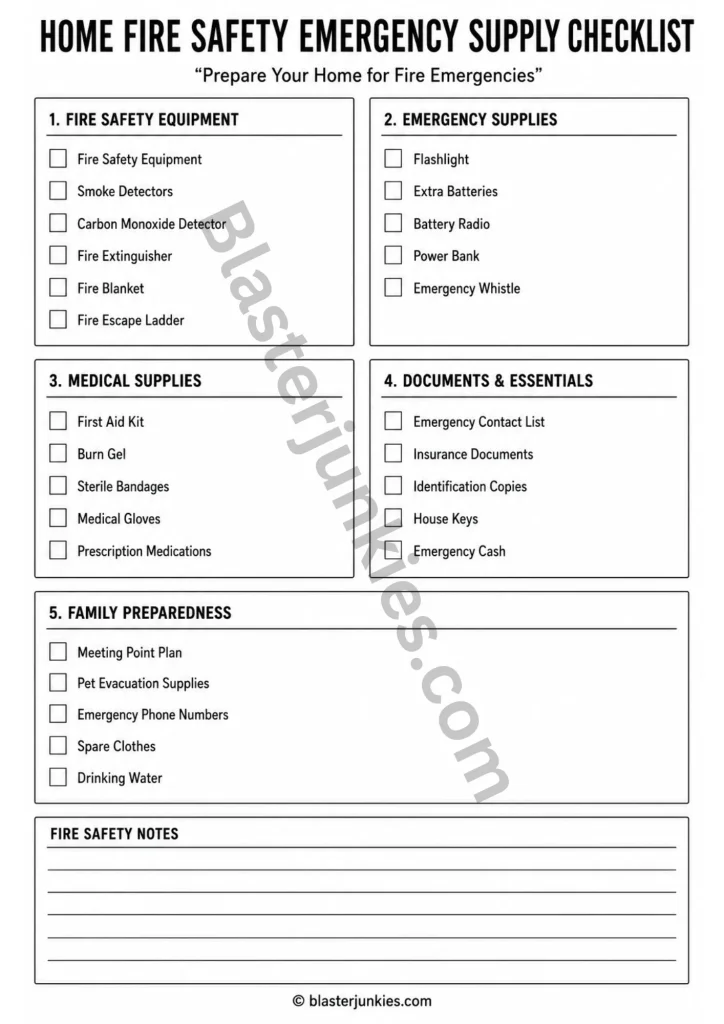
Beyond the basics, there are focused checklists for natural disasters, monthly supply inventory tracking, food and water storage specifically, home first aid and medical needs, power outage preparedness, a grab and go bag for quick evacuations, and a fire safety specific supply list.
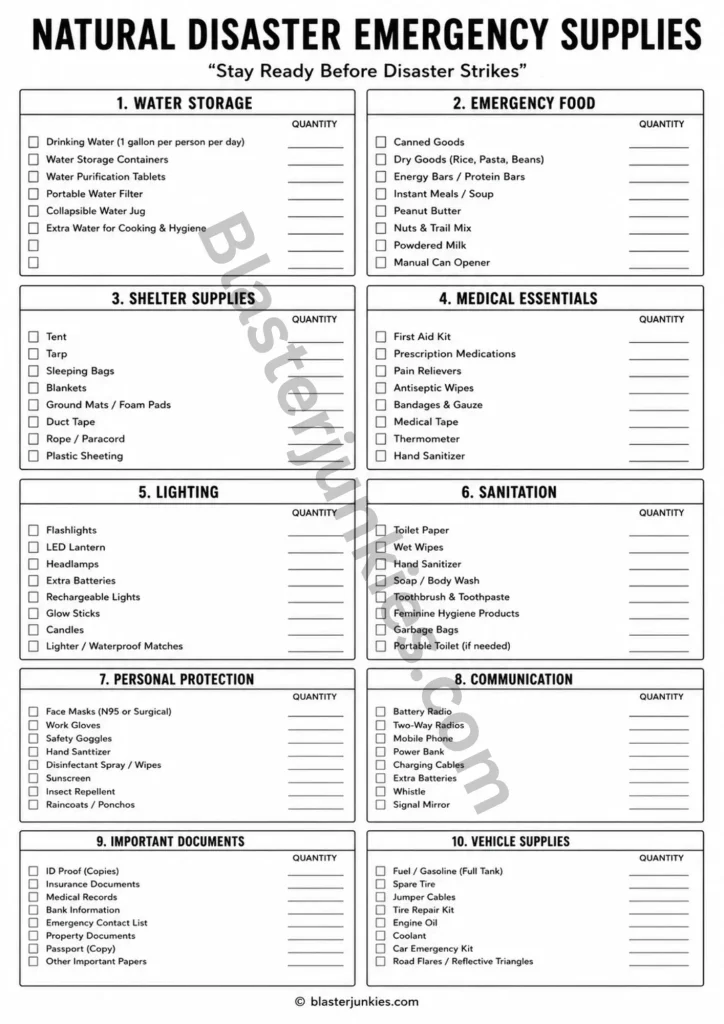
Having this range means you can tackle preparedness in stages rather than all at once start with the essentials checklist this weekend, then build out more specific kits (grab and-go bag, fire safety, medical) over the following weeks.
How to Build Your Supply System
Start with the essentials, not everything at once. Preparedness can feel overwhelming if you try to complete every checklist in one day.
Begin with the core essential supply list water, food, lighting, first aid and treat the more specific kits (fire safety, grab and go bag, vehicle supplies) as follow up projects over the following weeks.
Store supplies where you’ll actually reach them. A perfectly stocked emergency kit does no good buried behind holiday decorations.
Choose an accessible, known location, and make sure everyone in the household including older kids knows where it is.
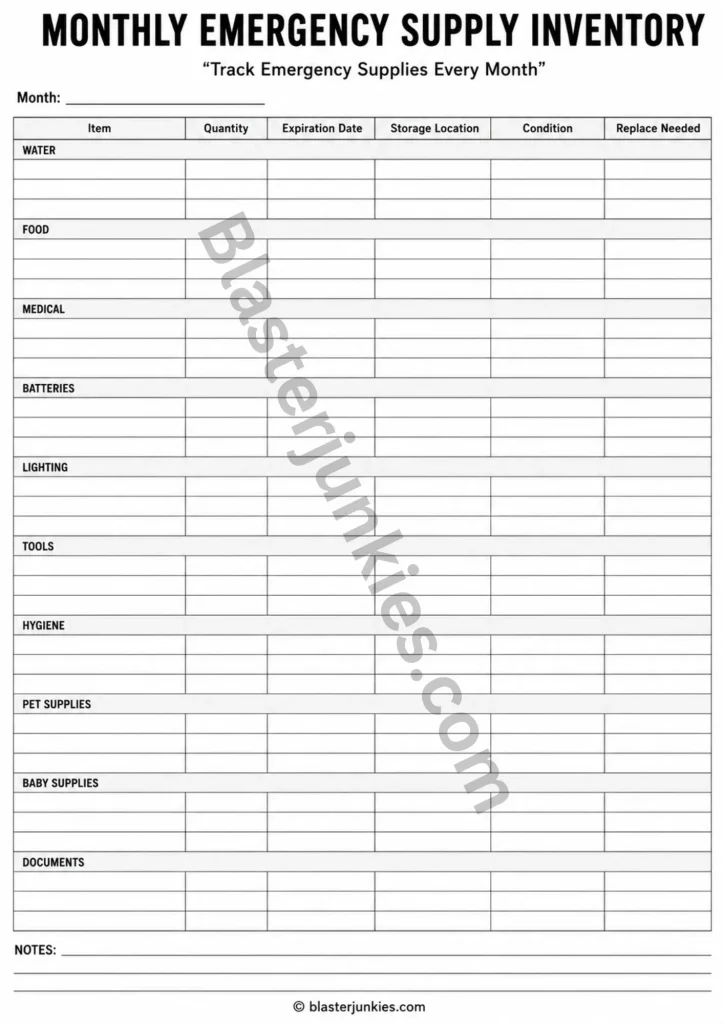
Set a recurring check in date. Batteries drain, medications expire, and water needs periodic rotation.
Use the monthly supply inventory checklist to build a simple habit of reviewing your kit every few months, checking expiration dates and replacing anything that’s used up or outdated.
Personalize the family list. The family preparedness checklist breaks needs down by household member, which makes it easy to remember often overlooked essentials like a child’s comfort item, specific medications, or pet food and vaccination records.
Don’t skip this step generic kits often miss the details that matter most in an actual emergency.
How to Involve Kids in Emergency Preparedness
Bringing children into the preparedness process rather than shielding them from it entirely actually helps reduce fear and builds real confidence.
Kids who understand what to do in an emergency tend to handle stressful moments far more calmly than kids who’ve never thought about it at all.
Let them help pack their own section. Many of the checklists include space for children’s items specifically.
Let your child help choose their comfort item, pick out a few favorite snacks for the kit, or organize their own small section of the grab and go bag.
This gives them a sense of control and familiarity rather than fear.
Turn the checklist into a learning activity. Reading through the supply list together is a natural opportunity to explain, in simple and reassuring terms,
Why each item matters not to scare them, but to help them understand that being prepared is just a normal, sensible thing families do, similar to packing for a trip.
In fact, the process feels a lot like prepping for travel much like working through a Vacation Packing List Checklist or a Camping Packing Checklist Printable, it’s simply about thinking ahead and packing smart, just for a different kind of trip.
Practice a simple family plan together. Beyond supplies, walk through where to meet, who to call, and what to do in a few basic scenarios.
Keeping this conversation calm and matter of fact much like using Family Conversation Cards to talk through other important topics helps normalize the discussion instead of making it feel alarming.
Check in on how they’re feeling. Talking about emergencies can bring up real anxiety for some kids, even when it’s handled gently.
If your family already uses something like a Mood Tracker Printable, this is a good moment to check in and make sure the conversation left them feeling more secure, not more worried.
Keeping the System Sustainable
An emergency kit is only useful if it stays current. Building preparedness into your household’s existing organizational habits makes it far easier to maintain.
If you already track pantry stock with a Pantry Inventory Printable or manage frozen goods with a Freezer Inventory Sheet, it’s a small step to add emergency food and water rotation into that same routine, checking expiration dates side by side with your regular groceries.
Preparedness as an Act of Care
At its heart, building a home emergency supply kit isn’t about fear it’s about care.
It’s the same instinct that leads a parent to pack a bandage before a hike or keep a spare phone charger in the car.
Taking the time to prepare, and involving your kids in that process, sends a quiet but powerful message: that your family thinks ahead, takes care of each other, and knows what to do when things don’t go as planned.
Print a checklist, set aside an afternoon, and start with the basics. Preparedness doesn’t have to happen all at once it just has to start.