Every autumn, the ground fills with leaves in every shape, color, and edge pattern imaginable but most of us walk past them without ever knowing exactly what tree they came from.
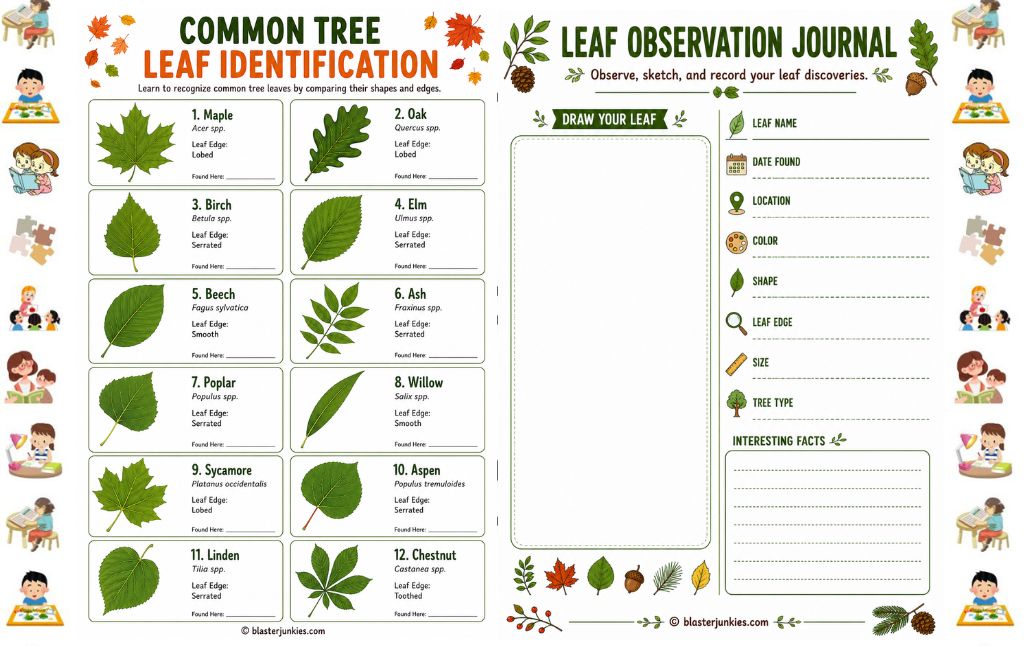
A Leaf Identification Printable changes that.
Instead of simply admiring the colors, it gives you and your kids a real framework for understanding what makes each leaf unique, from its shape and edge pattern to the specific tree species it belongs to.
In this guide, we’ll explore why leaf identification is such a valuable learning tool for families, how adults can use it to build genuine plant knowledge, and how to turn it into an engaging, hands-on activity kids will actually want to do.
Why Leaf Identification Is More Than a Fun Fall Craft
It’s easy to think of leaf collecting as a simple seasonal pastime, but there’s real science hiding in every leaf.
Botanists identify plants using a handful of consistent, observable traits shape, edge pattern, vein structure, and overall size and a leaf identification printable teaches exactly those same skills in a format anyone can use, no formal training required.
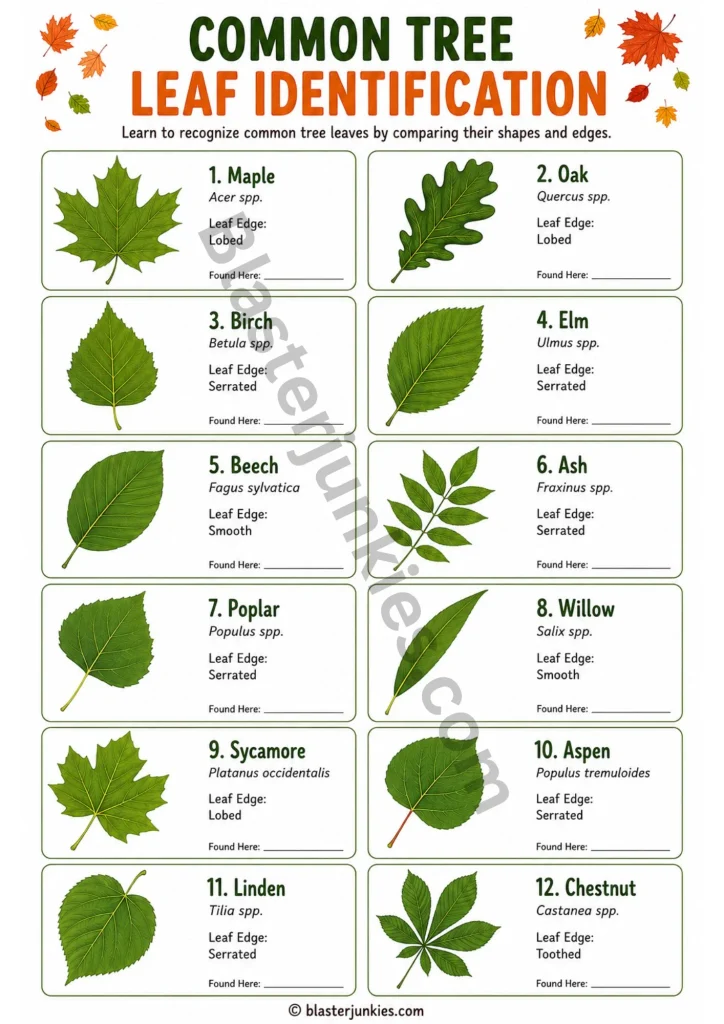
Once you understand a few key categories, a walk through the neighborhood turns into an exercise in pattern recognition rather than guesswork.
This matters because leaf identification is one of the most accessible entry points into naturalist thinking.
Unlike birds or insects, leaves don’t move, they’re everywhere, and they can be picked up, compared side by side, and examined closely without any special equipment.
For adults looking to build a genuine, lasting interest in nature whether for themselves or to share with their kids leaves are one of the easiest and most rewarding places to start.
Learning to See Shape, Edge, and Structure
The foundation of leaf identification comes down to three core observations.
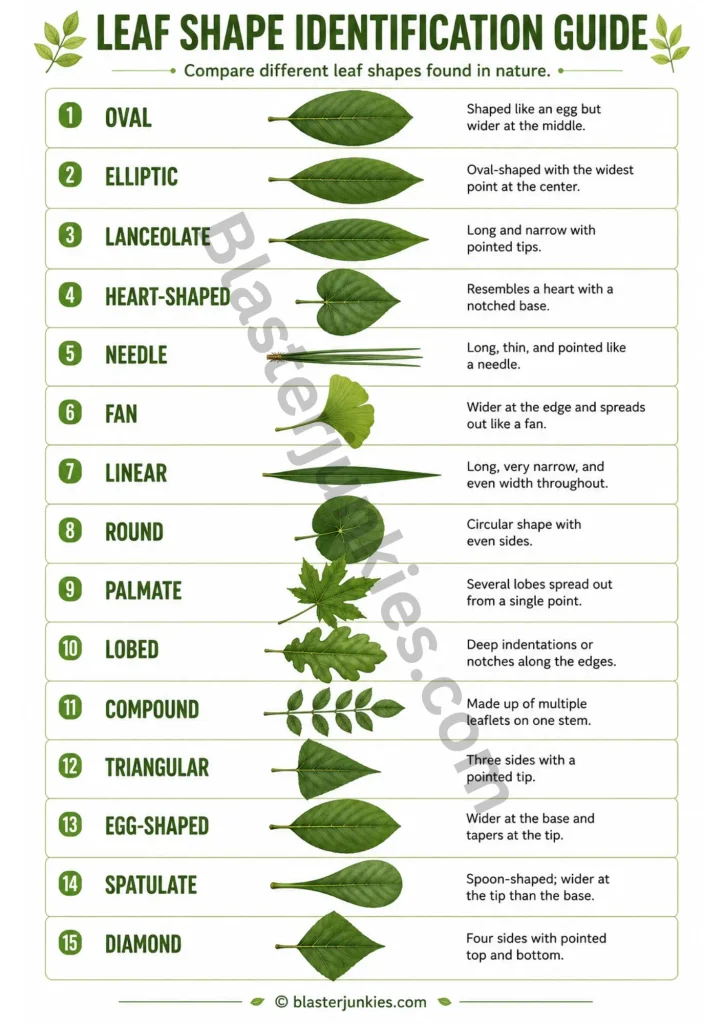
Shape is the most obvious starting point is the leaf oval, heart shaped, fan like, needle thin, or deeply lobed like an oak?
Learning to recognize a handful of common shapes gives you a fast first filter before narrowing things down further.
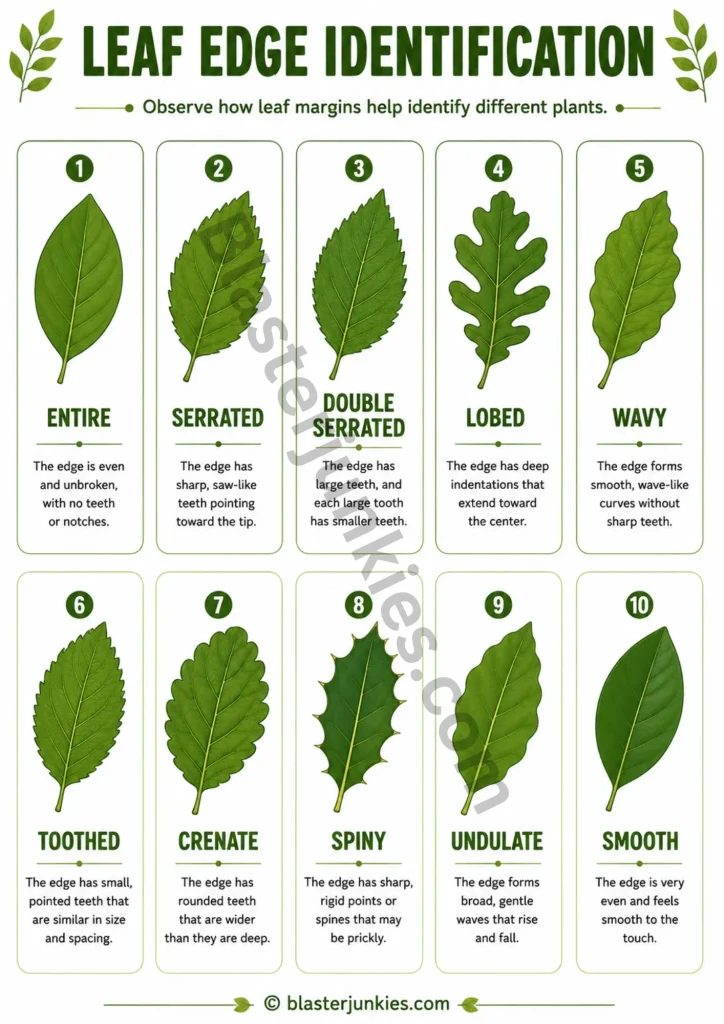
Edge pattern is the next layer of detail, and it’s often what separates similar looking leaves.
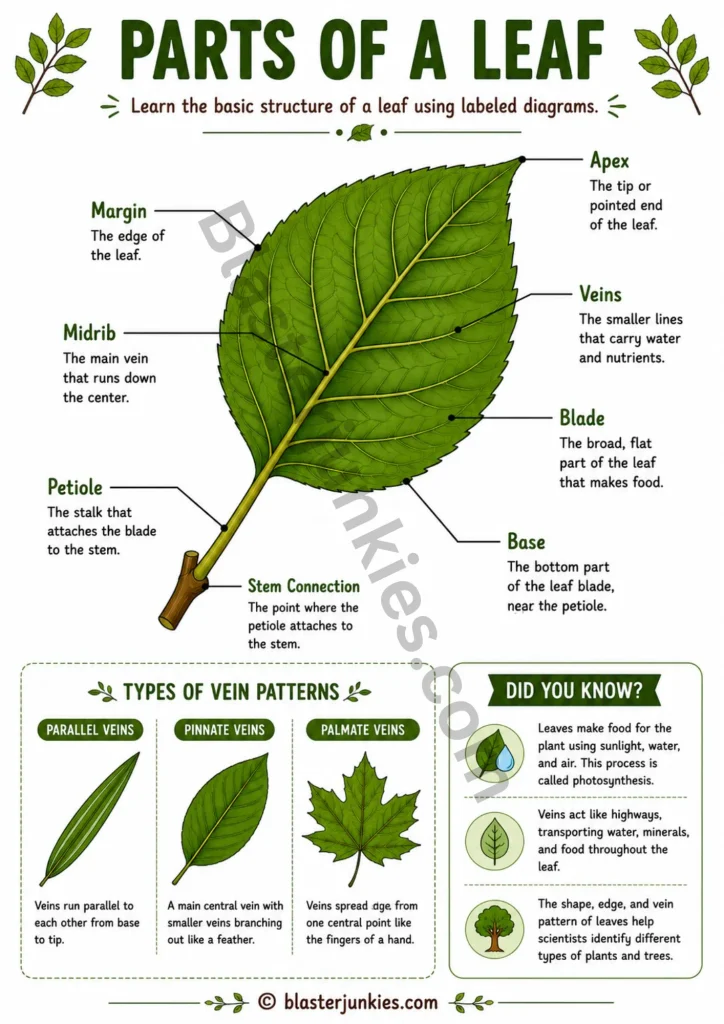
A serrated edge has small, sharp, saw like teeth, while a lobed edge has deep, rounded indentations reaching toward the center of the leaf.
Smooth edges have no teeth or notches at all, and toothed or spiny edges fall somewhere in between.
Once you start noticing edges specifically, leaves that once looked nearly identical suddenly become easy to tell apart.
Vein structure rounds out the picture for anyone who wants to go a step further.
Parallel veins run in straight lines from base to tip, pinnate veins branch off a central vein like a feather, and palmate veins spread outward from a single point like fingers on a hand.
Understanding vein patterns is especially useful because it often reveals a leaf’s structural family even when its color or size varies seasonally.
Building Real Identification Skills Over Time
One of the most effective ways to use a leaf identification printable is to treat it less like a one time worksheet and more like an ongoing reference.
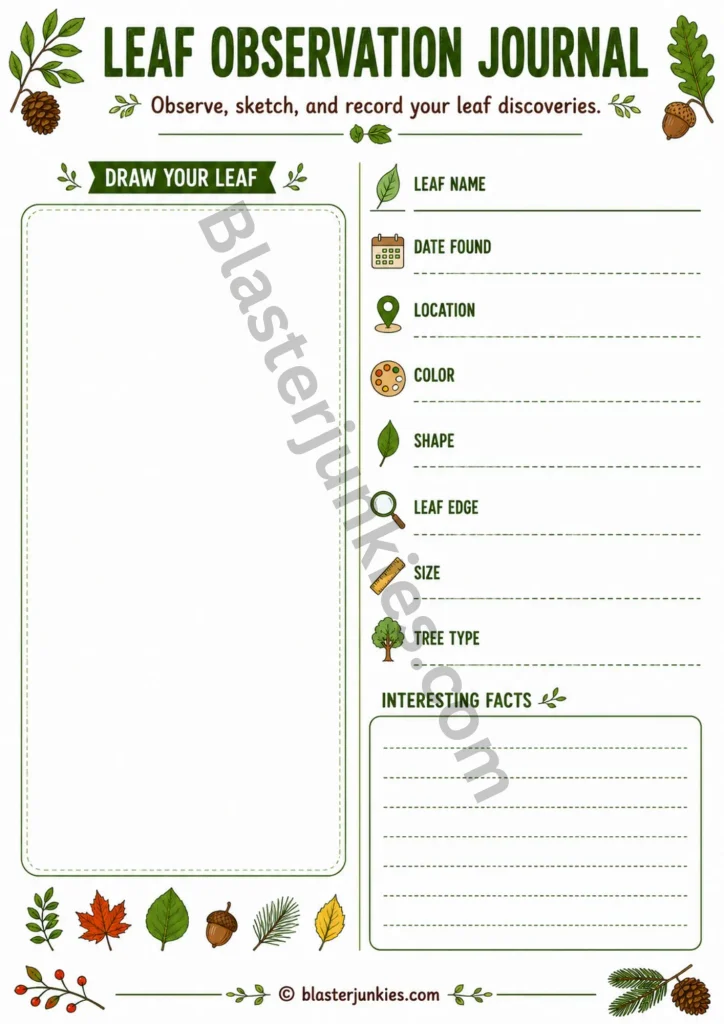
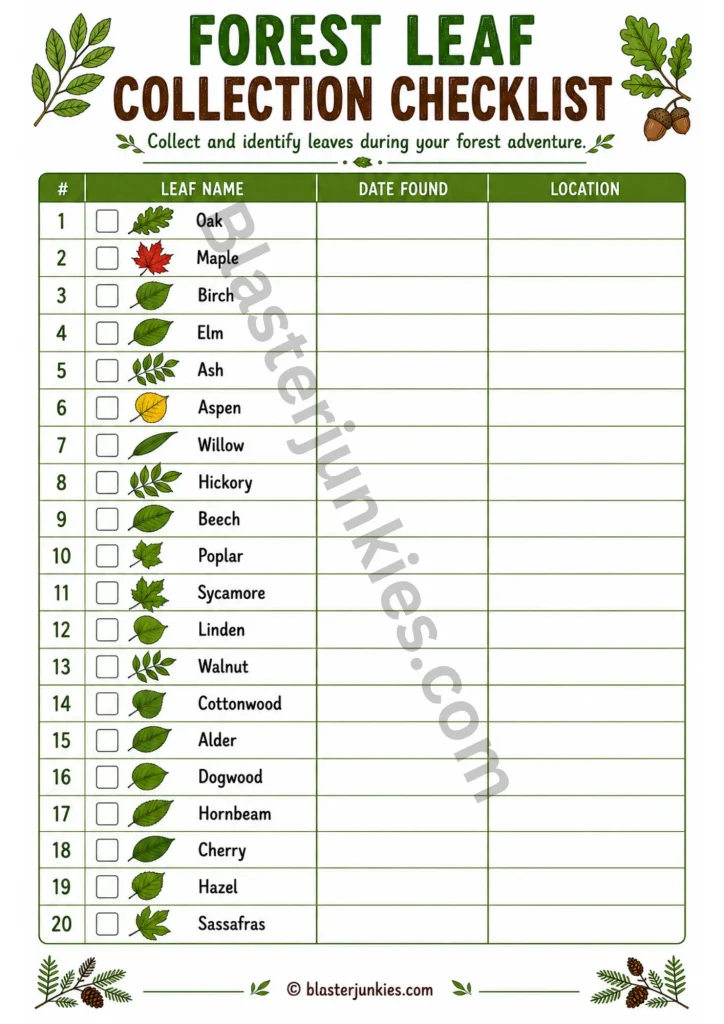
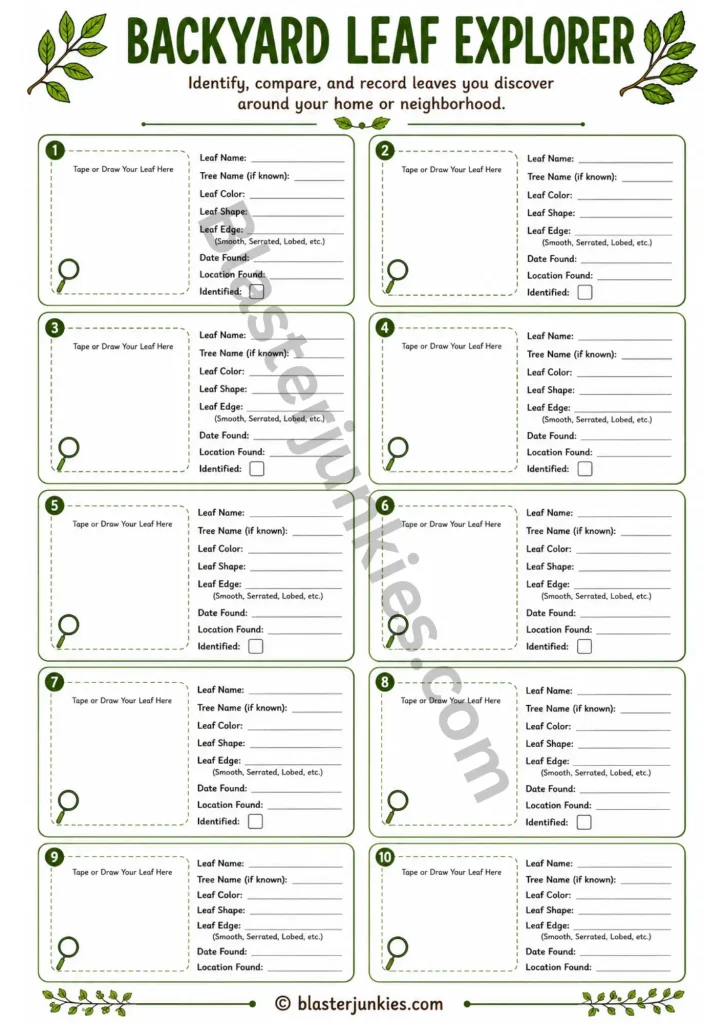
Keeping a running log of leaves found where, when, and what tree they came from turns a single afternoon activity into a small, evolving nature journal.
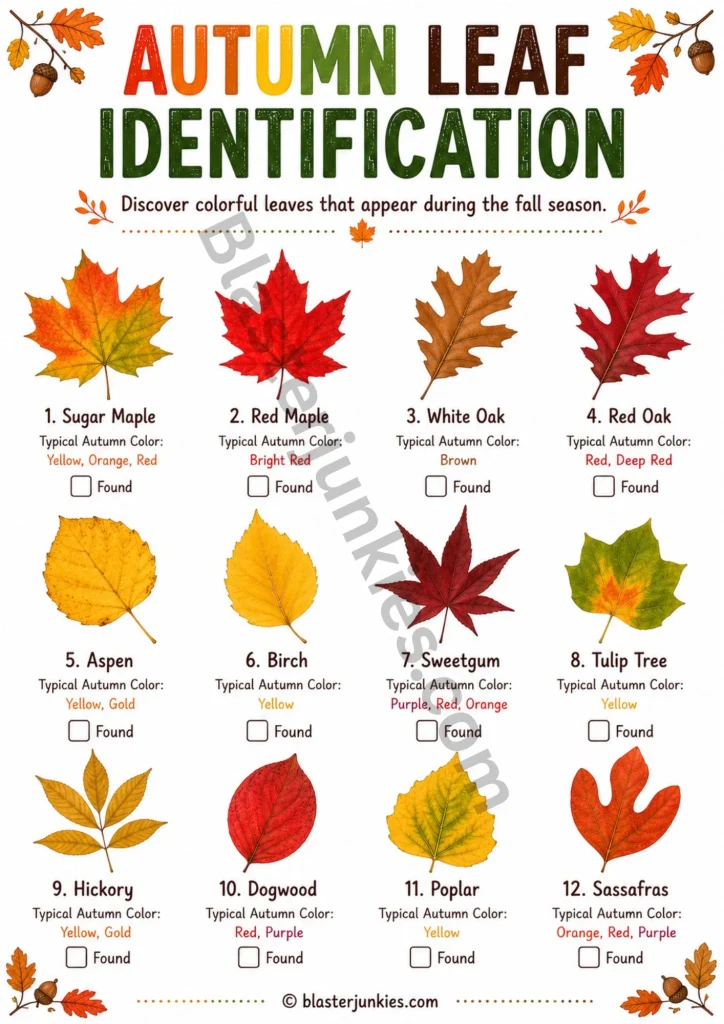
Over a season, or even a year, this kind of record starts to reveal genuinely interesting patterns, like which trees change color first in your area, or how leaf shapes vary between trees that seem similar at a glance.
This approach mirrors how other tracking based printables work well over time.
Just as a Garden Harvest Tracker helps gardeners notice patterns across a growing season, a leaf journal helps build a similar sense of familiarity with the trees in your own neighborhood.
And if you’re already building out a broader list of seasonal goals, leaf identification pairs naturally with an Autumn Bucket List Printable, since “learn to identify five different trees” makes a perfect addition to any fall to do list.
Turning a Walk Into a Full Outdoor Learning Session
Leaf identification rarely needs to stand alone as an activity.
It fits naturally into a broader outdoor outing, especially when paired with other nature focused printables.
Many families like to combine leaf identification with a broader nature search, since spotting specific leaf types works well alongside an Autumn Scavenger Hunt Printable one printable asks kids to find general autumn treasures, while the other adds a layer of specificity by asking them to actually name what they’ve found.
It’s also worth thinking about how this fits into a family’s regular outdoor rhythm.
A short walk built around leaf spotting is a great complement to something like a Daily Walking Challenge Chart, since it gives kids (and adults) a reason to want to get outside and move, rather than treating the walk as an obligation.
Making It a Family Learning Habit
Leaf identification works especially well as a recurring family activity rather than a single outing, since tree leaves change dramatically across the seasons the same maple tree can look completely different in September versus November.
Returning to the same trees repeatedly and tracking how they change builds a much deeper understanding than a single walk ever could.
Ending each outing with a short conversation about what was found which leaf was the trickiest to identify, which tree was a surprise adds a reflective element that deepens the learning, similar to how Family Conversation Cards create space for connection and discussion after a shared activity.
How to Use It With Kids
For younger children, keep things visual and hands on.
Rather than starting with technical vocabulary like “lobed” or “serrated,” begin with simple comparisons this leaf is pointy, this one is round, this one has bumpy edges.
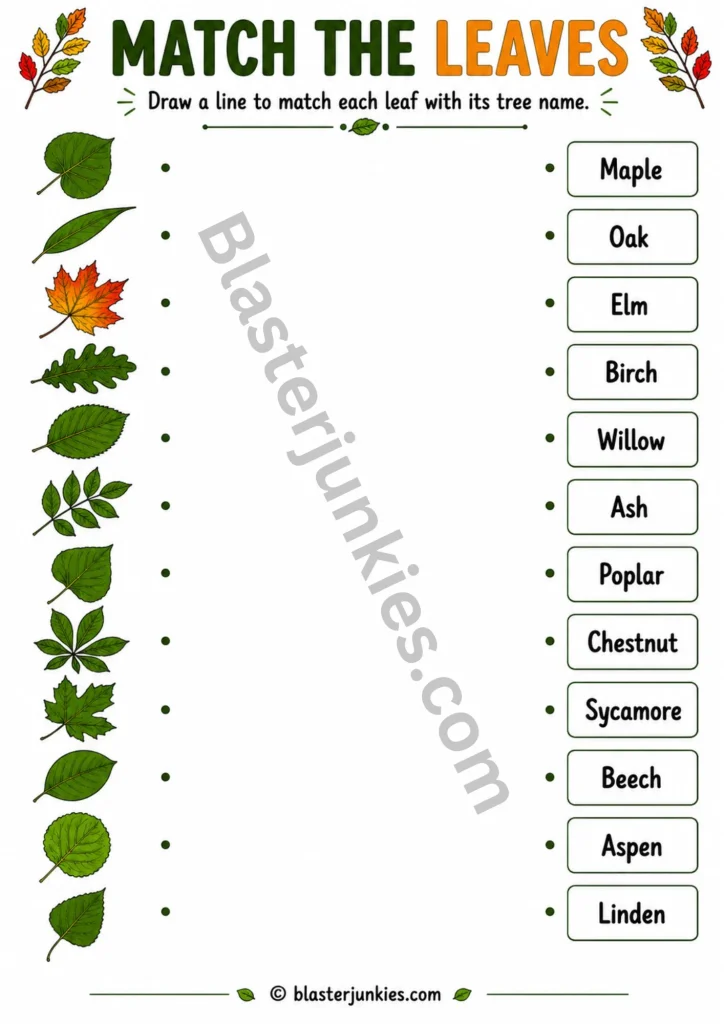
Matching activities, like connecting a leaf shape to its tree name, work particularly well for early learners because they build recognition skills without requiring reading fluency.
Elementary aged kids can usually handle the full vocabulary of shapes and edges, and many genuinely enjoy the challenge of correctly identifying a leaf using the guide before checking their answer.
This is a great age to introduce a simple leaf journal, where kids tape or draw their finds and record basic details like color, shape, and location not unlike how a Summer Habit Tracker for Kids turns ongoing observation into something satisfying to complete and look back on.
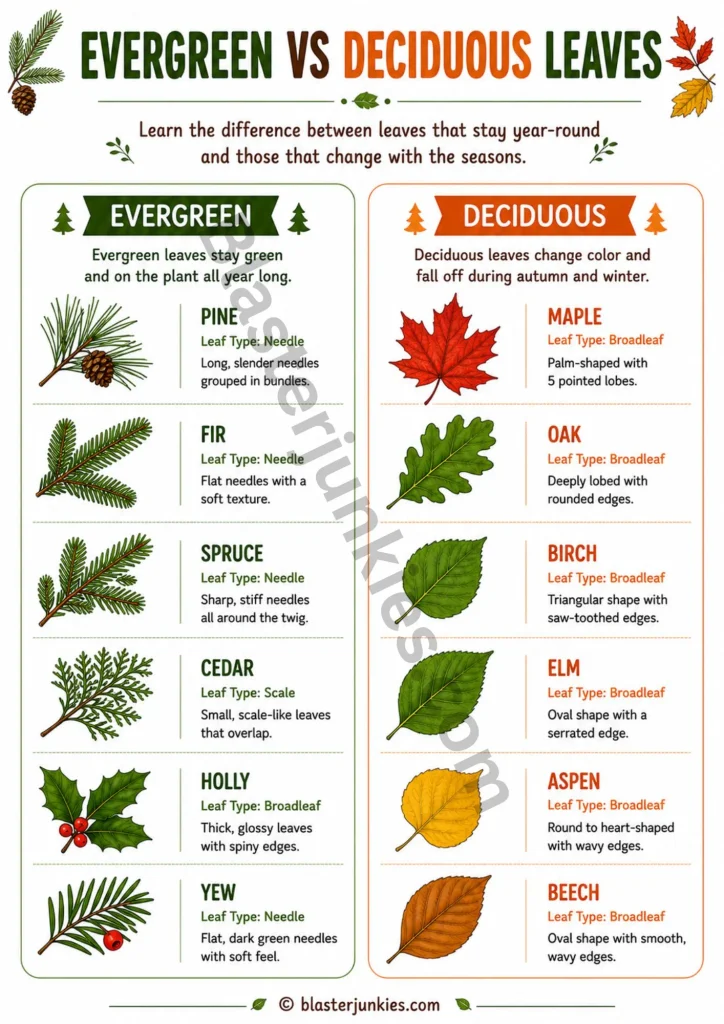
Older kids can take things further by researching the trees they find, comparing evergreen versus deciduous leaves, or even starting a small pressed leaf collection labeled with species names.
Giving them ownership over organizing their own leaf collection adds a layer of independence and pride that keeps the activity engaging well beyond a single afternoon.
Bringing It All Together
A leaf identification printable does more than fill an afternoon it teaches real observational skills, builds genuine familiarity with the natural world, and gives families a simple, repeatable reason to get outside together.
Whether you’re identifying a single tree in your backyard or building a full seasonal leaf journal, the process rewards curiosity and patience in equal measure.
Start with the basics shape and edge and let vein patterns and species names come later as confidence builds.
Before long, walking past a tree will feel less like passing scenery and more like greeting an old, familiar friend.