Walking a dog seems simple on the surface clip on the leash, head out the door, come back home.
But anyone who has walked a dog regularly knows there’s more to it than that.
From making sure the right gear is packed to watching for safety hazards along the route to noticing subtle signs of discomfort afterward, a good walk involves a surprising number of small details.
That’s where a Dog Walker Checklist becomes an essential tool, whether you’re a pet parent managing your own dog’s daily walks or someone caring for multiple dogs as part of a pet sitting routine.
In this guide, we’ll cover why a structured walking checklist matters, how adults can use it to build a safer and more consistent routine, and how it can become a meaningful, hands on activity for kids who want to help care for the family dog.
Why a Structured Walking Routine Matters
It’s easy to assume a walk is just a walk, but dogs rely on their daily outings for far more than bathroom breaks.
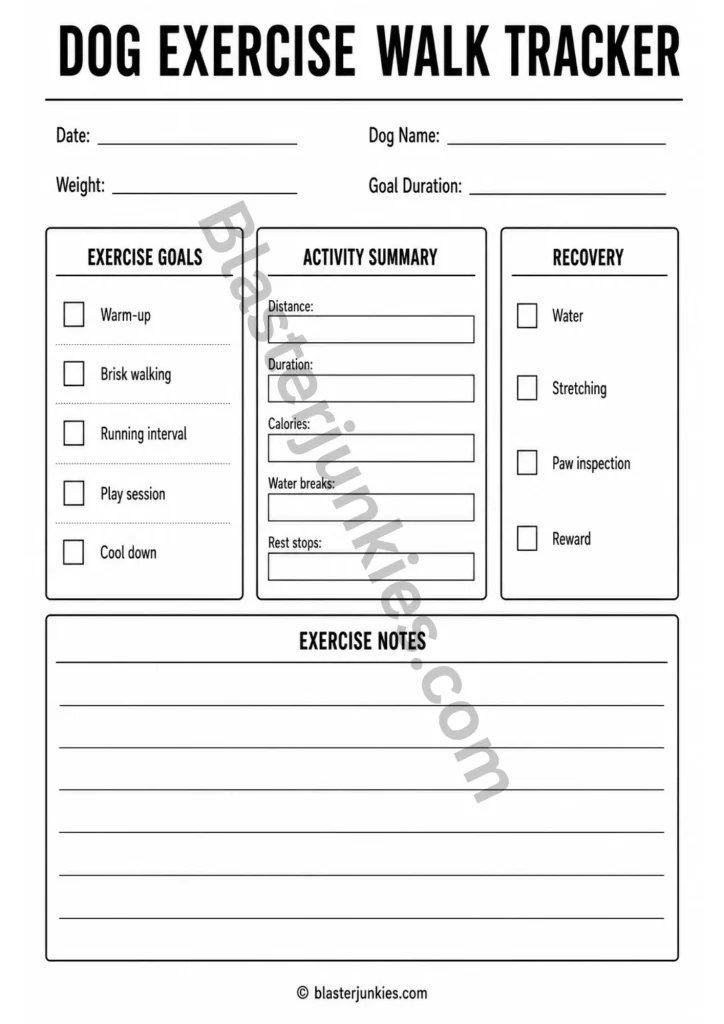
Walks are how they get exercise, mental stimulation, and socialization and they’re also one of the best windows into a dog’s overall health.
A dog that seems less enthusiastic about walking, limps partway through, or struggles to stay hydrated is often telling you something important.
Without a system for noticing these details, it’s easy for small issues to go unnoticed until they become bigger problems.
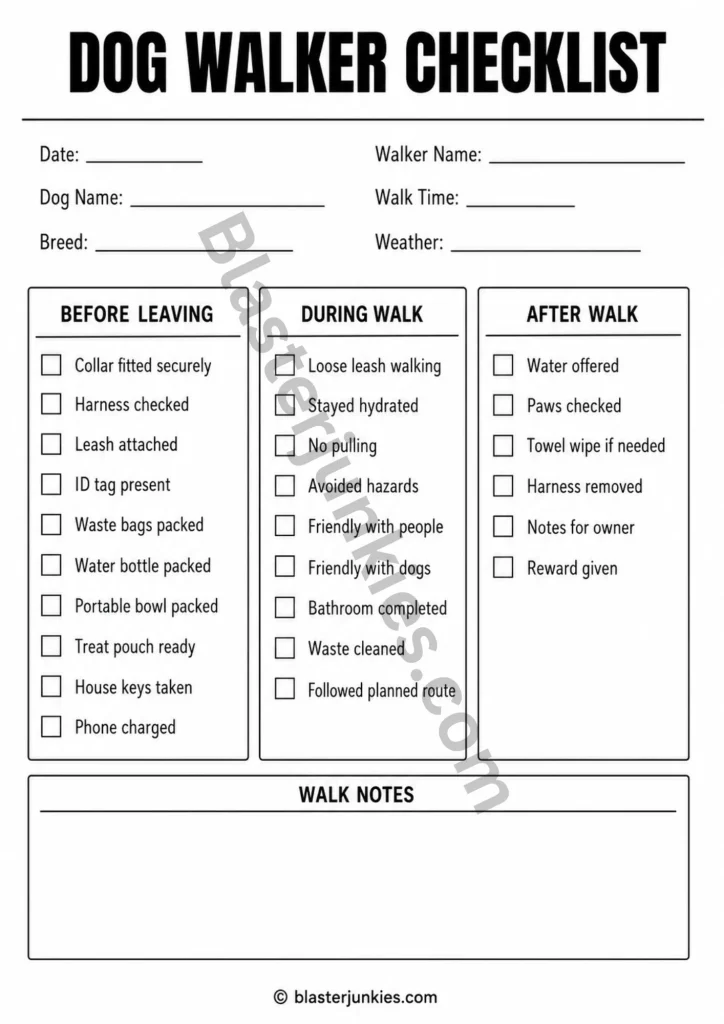
A checklist approach breaks the walk into three natural phases: what happens before you leave, what happens during the walk itself, and what happens once you’re back home.
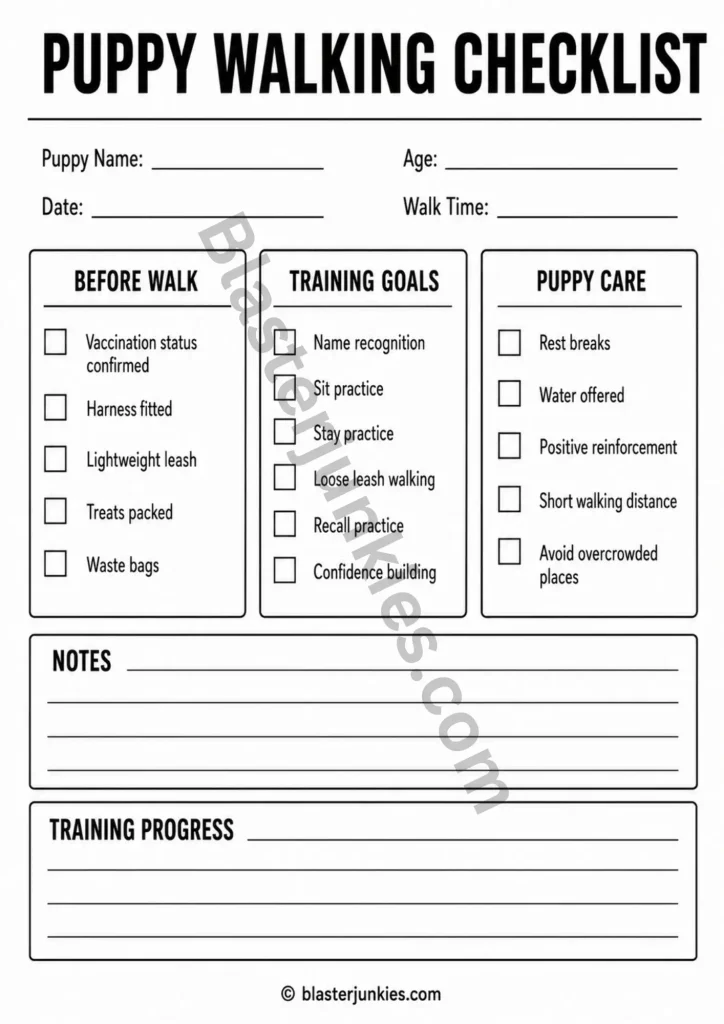
Before leaving, the focus is on gear and safety collar and harness fit, a securely attached leash, ID tags, waste bags, and water.
During the walk, attention shifts to behavior and environment loose leash walking, hydration, avoiding hazards, and staying alert to traffic or other dogs.
After the walk, the focus moves to recovery checking paws, offering water, and noting anything unusual in the dog’s behavior.
Structuring the routine this way means nothing important gets skipped, even on busy days.
Building Consistency Across Different Walks
Not every walk looks the same, and that’s exactly why having a flexible system matters more than a single rigid list.
A quick morning walk before work has different priorities than a longer evening walk near sunset, and both are different again from a weekend outing on unfamiliar trails.
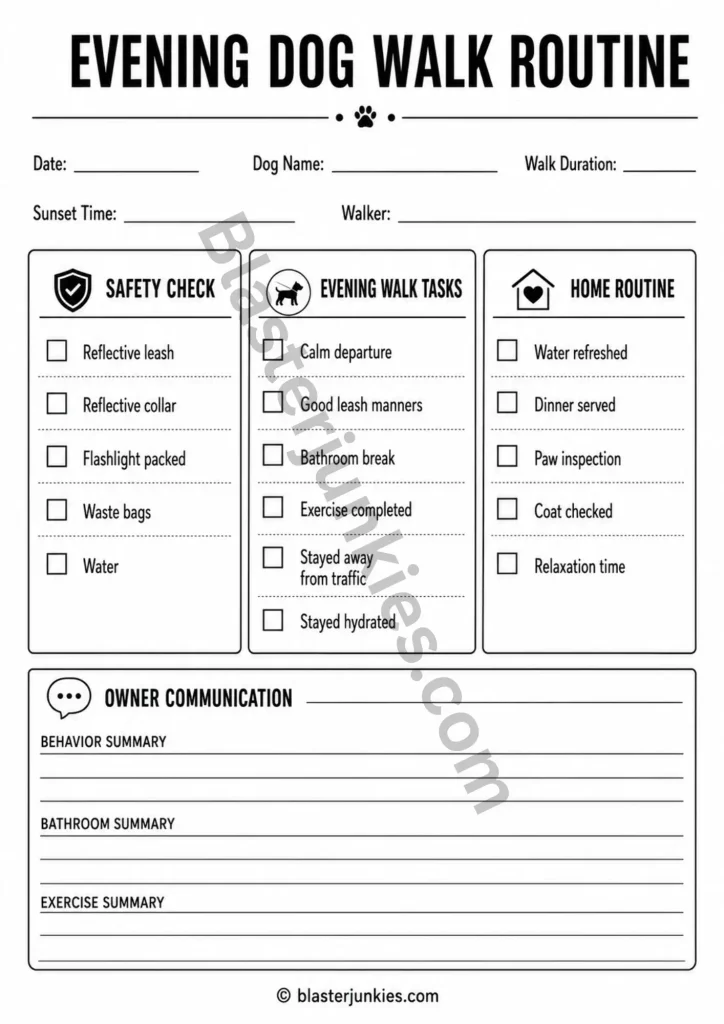
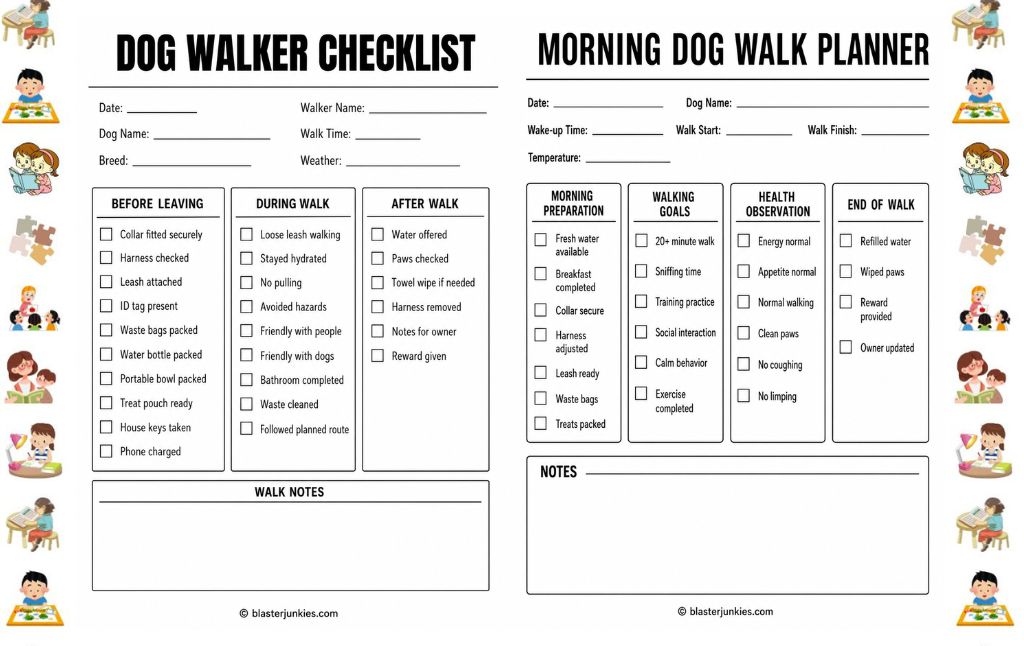
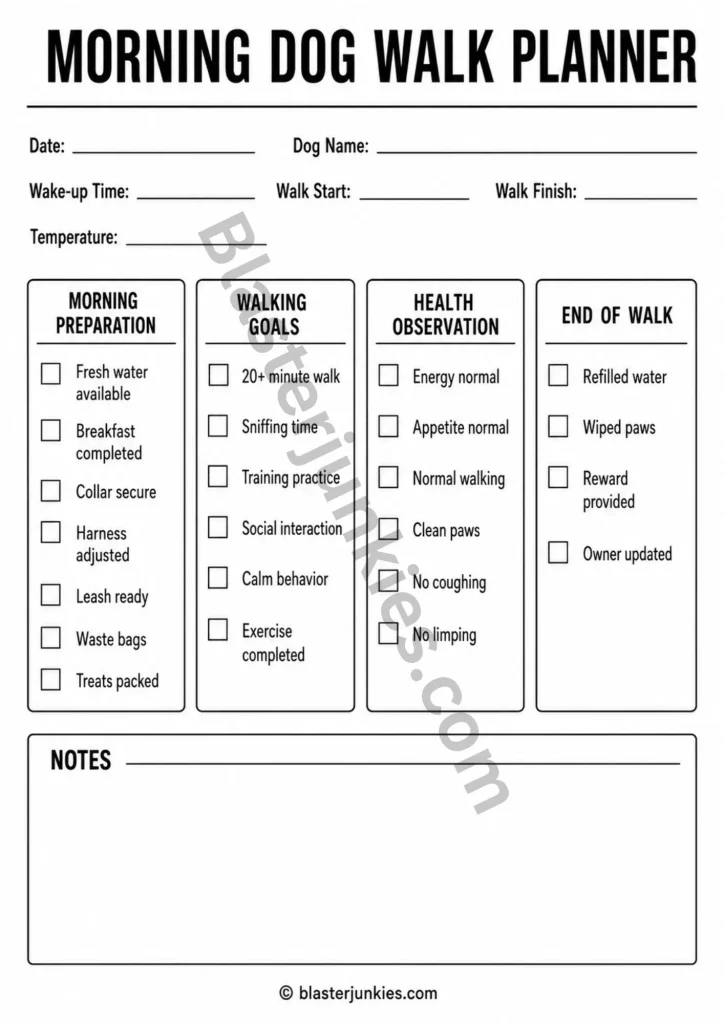
Morning routines tend to focus on getting essentials done efficiently fresh water, breakfast, a secure harness while evening walks often add safety considerations like reflective gear and lighting.
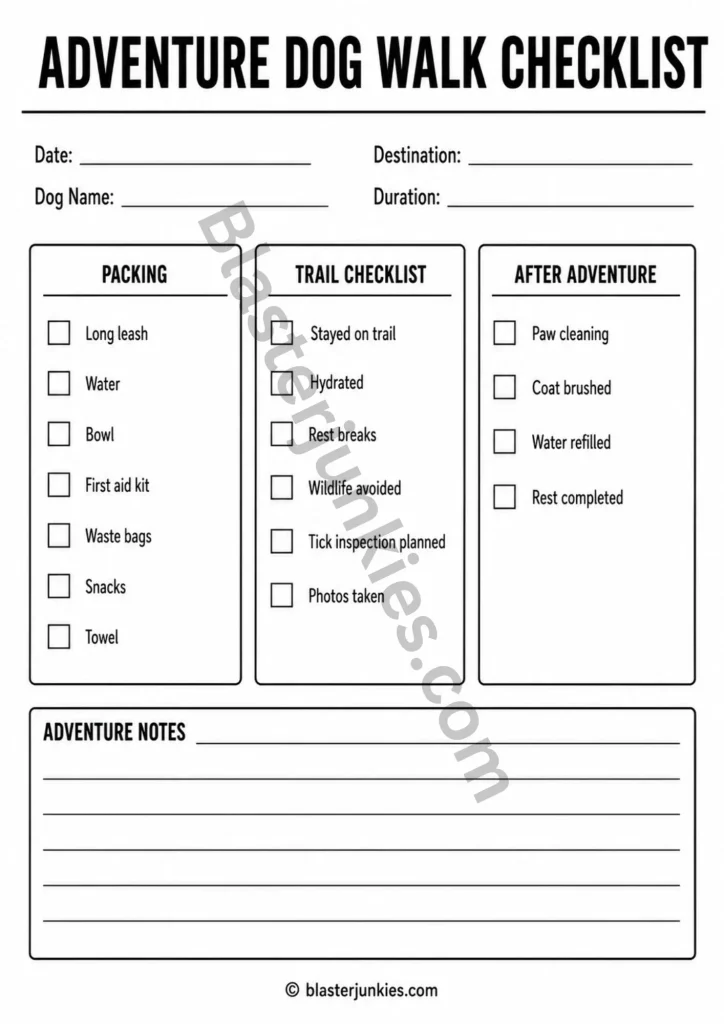
Longer outdoor adventures, meanwhile, call for extra packing: a first aid kit, snacks, and a plan for tick checks afterward.
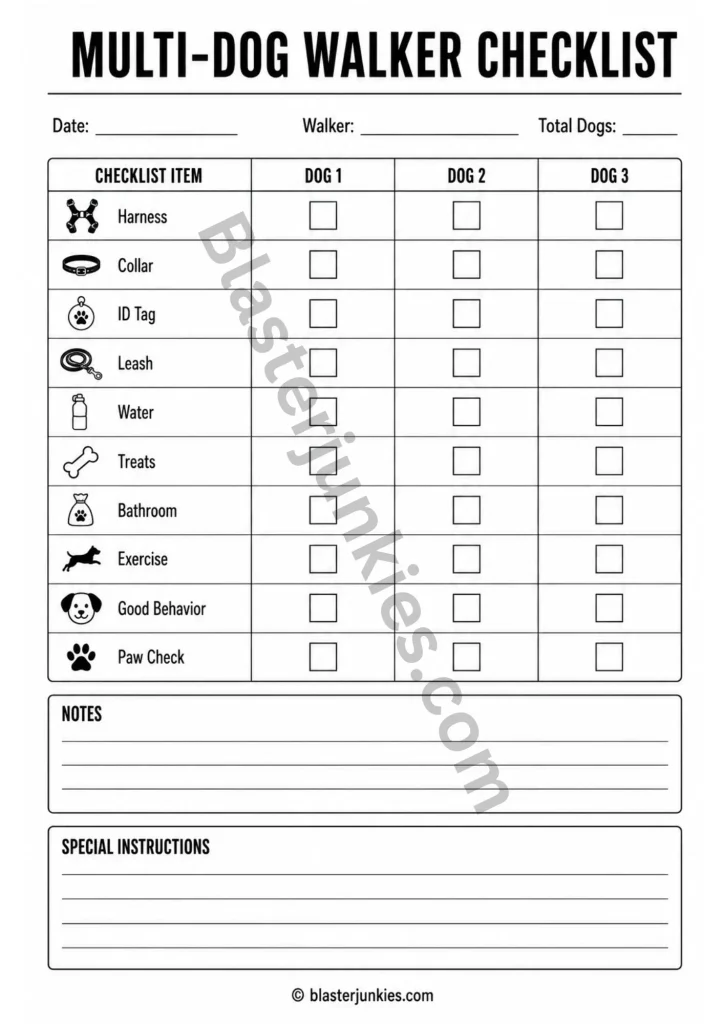
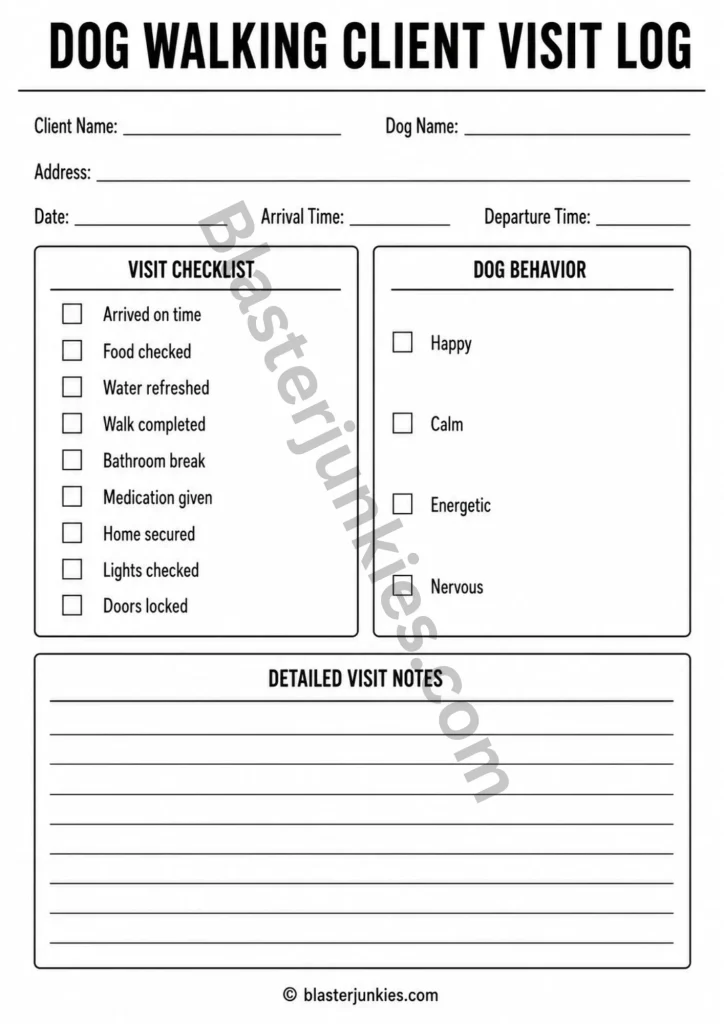
For anyone managing multiple dogs, whether professionally or within a multi pet household, having a consistent format to track each animal separately prevents details from getting mixed up.
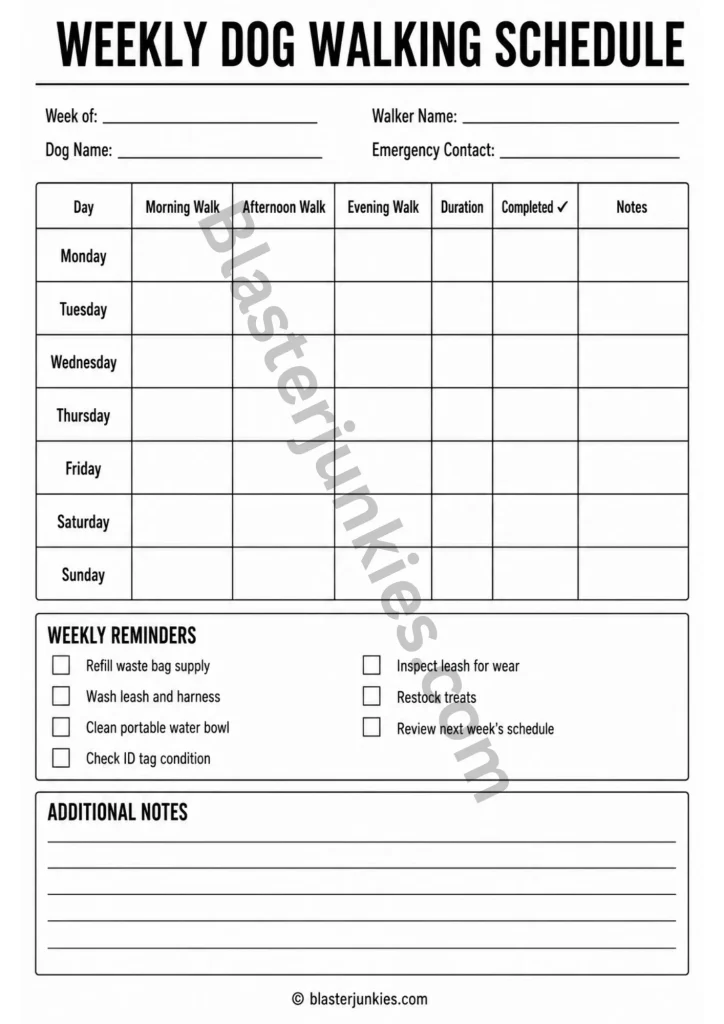
This is similar in spirit to how a well organized weekly schedule keeps a full week of walks on track, or how a Daily Walking Challenge Chart helps a person track their own movement goals the underlying idea is the same: consistency turns a good intention into a reliable habit.
Safety First: The Details That Matter Most
Some of the most important items on a dog walking checklist aren’t glamorous, but they’re the ones that prevent real problems.
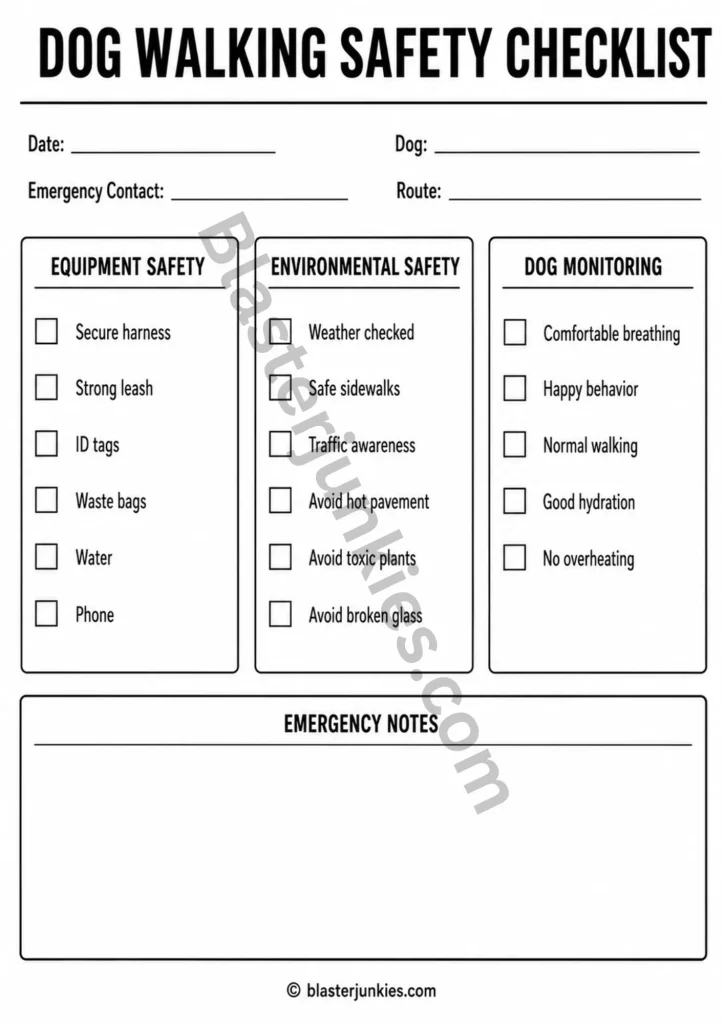
Making sure the collar and harness are properly fitted, that the leash is strong and securely attached, and that ID tags are current can make all the difference if a dog ever slips away unexpectedly.
Environmental awareness matters just as much checking the weather, avoiding hot pavement in summer, watching for toxic plants, and staying alert around traffic are all small habits that add up to a much safer walk.
This kind of proactive thinking mirrors how families approach safety in other areas of life.
Just as a Home Emergency Supply List helps a household prepare for the unexpected, a walking safety checklist helps prevent avoidable incidents before they happen.
And much like tracking overall wellness with a Healthy Habit Challenge or a Home Workout Challenge Printable, a consistent walking routine benefits both the dog’s physical health and the humans walking alongside them.
Making It a Family Habit
One of the best ways to keep a dog walking routine consistent is to build it into the family’s existing rhythm rather than treating it as an extra task.
Just as families use a Morning Routine Chart for Kids to keep mornings running smoothly, a simple before walk checklist can be posted near the leash hook or front door as a quick visual reminder.
Pairing the walk with an already established time of day right after breakfast, right before dinner makes it far more likely to happen consistently, rather than becoming something that gets skipped when life gets busy.
It’s also worth connecting walking routines to the dog’s broader wellbeing.
A Pet Health Checklist works hand in hand with a walking checklist, since many of the same health signs appetite, energy, mobility, coat condition show up clearly during a walk.
Checking in after each outing with a quick note about how the dog seemed can turn into a simple, ongoing wellness record over time.
How to Get Kids Involved
Kids often want to help walk the family dog, and a checklist is a great way to give them a real, meaningful role without handing over full responsibility for safety.
Younger children can take ownership of small, simple tasks checking that the water bottle is packed, confirming the waste bags are in the bag, or reminding an adult to double check the leash.
Older kids can take on more, like observing the dog’s behavior during the walk or filling out a simple notes section afterward describing how the walk went.
This kind of shared responsibility works especially well when it’s framed as a game or a challenge rather than a chore.
Similar to how a Summer Habit Tracker for Kids turns daily goals into something satisfying to check off, kids tend to enjoy marking boxes on a walking checklist and watching a full week come together.
It teaches responsibility, builds routine, and helps children understand that caring for a pet involves more than just playing it’s also about noticing details and following through consistently.
To make it a true family activity, consider ending each walk with a quick group conversation about how it went, similar to the way Family Conversation Cards spark reflection and connection at the dinner table.
A few simple questions Did the dog seem happy? Did we remember everything? What should we do differently tomorrow? turn a routine walk into a shared learning experience.
Bringing It All Together
A dog walker checklist isn’t just about staying organized it’s about keeping your dog safe, healthy, and happy on every outing, while giving the whole family, including kids, a structured and rewarding way to be involved.
Whether you’re managing a single family dog, a puppy still learning the ropes, or several dogs as part of a walking routine, a consistent checklist transforms walking from a rushed daily task into an intentional, positive habit.
Start with the basics gear checks before you leave, safety awareness during the walk, and a quick recovery check afterward and build from there.
Over time, this simple system will help you catch small issues early, build stronger walking habits, and turn daily walks into one of the best parts of your family’s routine.