This 15 Page Paper Piecing Pattern Pack is a sophisticated digital collection designed for the standard A4 format.
While “paper piecing” is often a term used in quilting, these templates are designed as Geometric Mosaic Templates (also known as low poly art or stained glass style).
Each page features a high contrast outline of a recognizable subject, broken down into hundreds of geometric facets.
This collection serves as a powerful bridge between math (geometry), fine motor development, and artistic expression.
Detailed Breakdown of the 15 Patterns
This collection is categorized by complexity and theme, allowing parents and teachers to choose the right “challenge level” for their child.

Wildlife Specimen Series:
The Forest Fox (Page 3): A detailed, sitting fox. Highly complex, perfect for older children.
The Howling Wolf (Page 10): A dramatic silhouette against a circular moon.
The Tropical Toucan (Page 12): Features a large beak and wood-texture branch.
The Hummingbird (Page 15): Captures the energy of flight through sharp, angled wing facets.
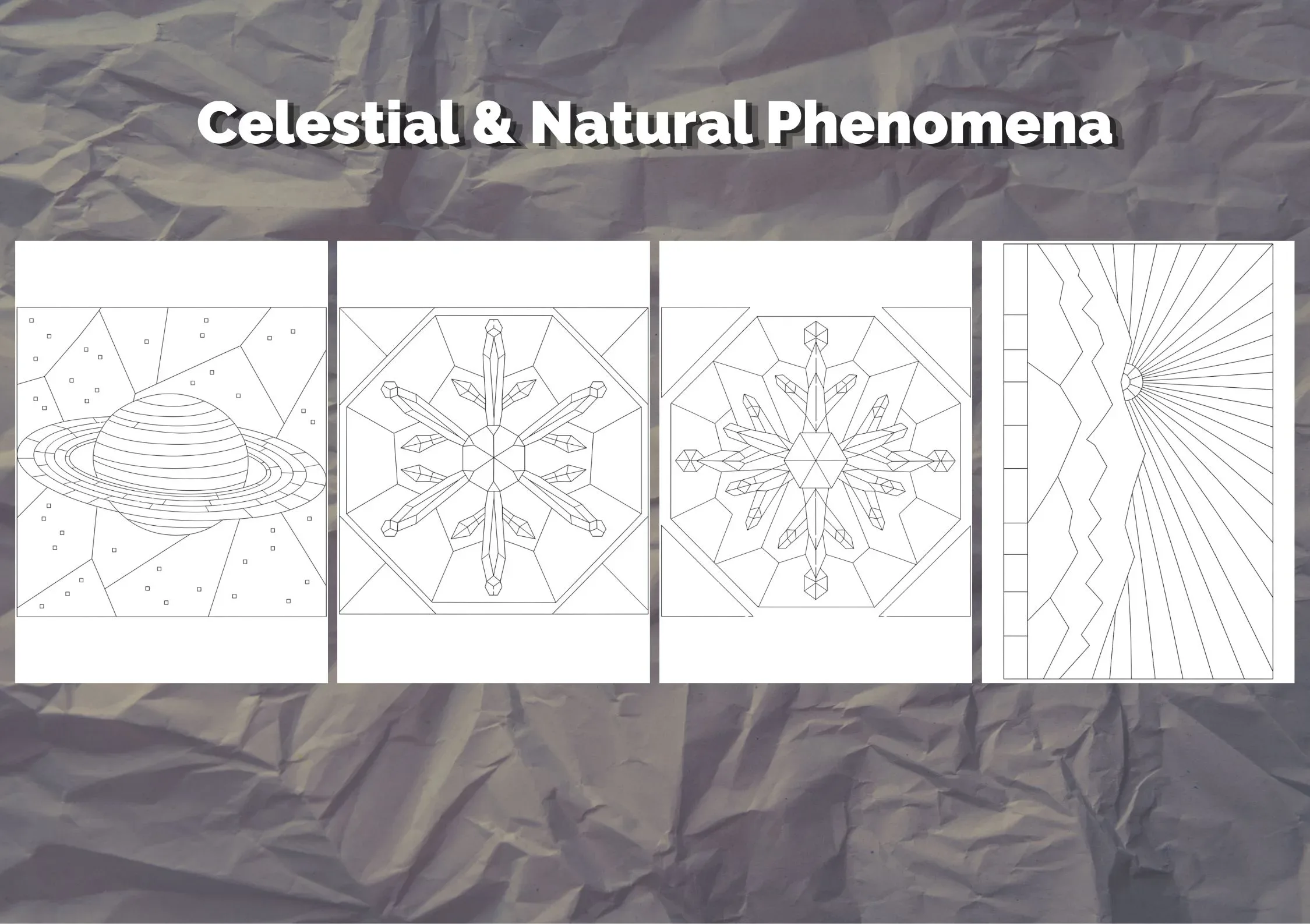
Celestial & Natural Phenomena:
The Ringed Planet (Page 5): A low-poly version of Saturn. Great for space units.
The Geometrical Snowflakes (Pages 4 & 17): Symmetrical patterns that teach children about hexagonal geometry.
The Mountain Sunrise (Page 16): An abstract, jagged landscape featuring radiating “sun rays.”
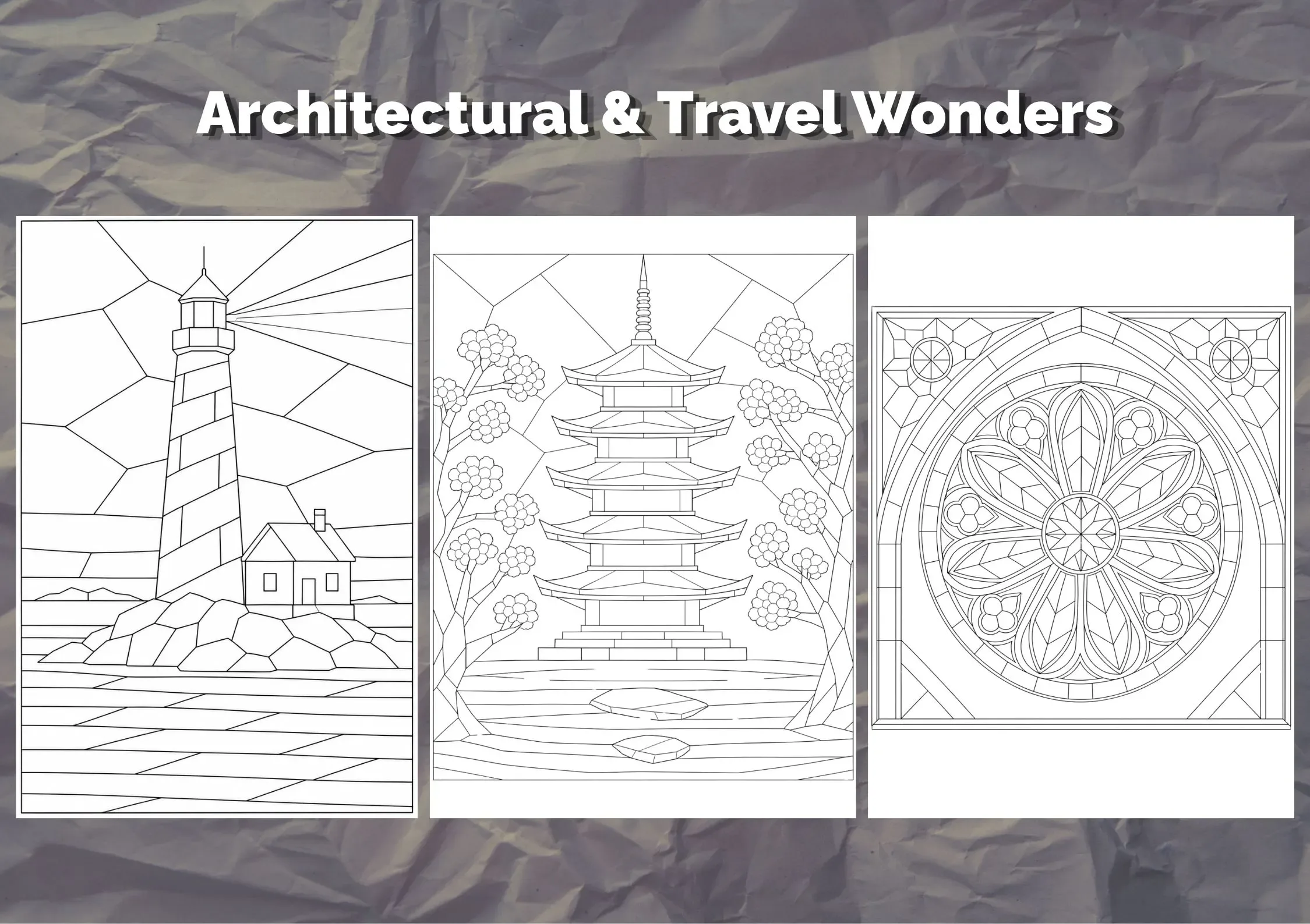
Architectural & Travel Wonders:
The Lighthouse (Page 7): A classic seaside scene on a rocky outcrop.
The Japanese Pagoda (Page 14): Features tiered roofs and cherry blossom trees.
The Rose Window (Page 11): A highly intricate design mimicking gothic cathedral glass. This is the most difficult pattern in the pack.
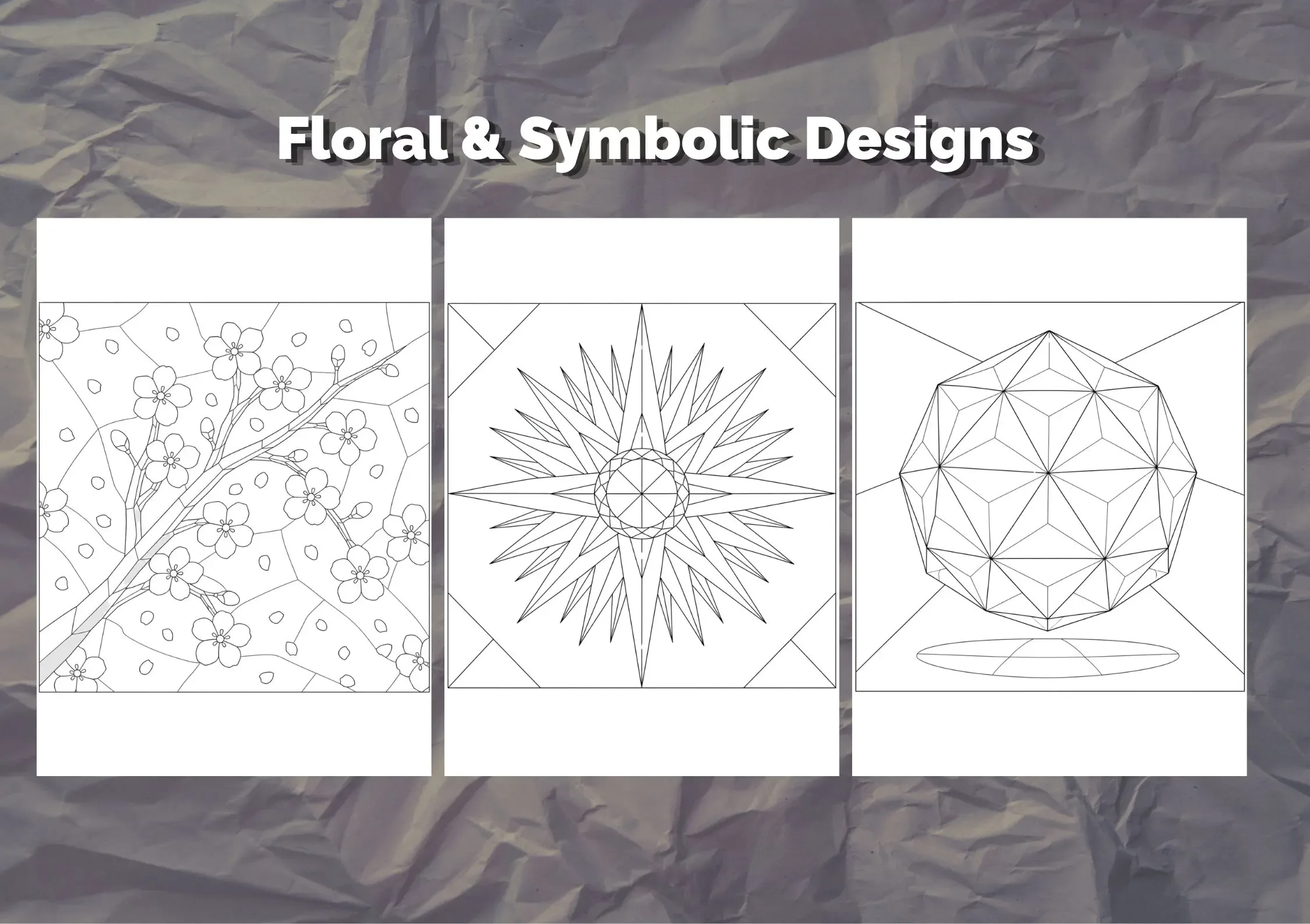
Floral & Symbolic Designs:
Cherry Blossoms (Page 9): A branch with delicate buds.
The Compass Rose (Page 8): A multi-pointed star that teaches cardinal direction through geometry.
The Geodesic Sphere (Page 13): A study in triangles forming a 3D-effect globe.
How to Use These Patterns with Kids
There are three main ways to enjoy these templates, depending on the age and equipment available:
1. The “True” Paper Piecing (Mosaic Style)
Step 1: Print the template on a standard A4 sheet.
Step 2: Gather scraps of colored paper, old magazines, or colored cardstock.
Step 3: Cut small geometric shapes from the scraps.
Step 4: Glue the colored pieces into the corresponding shapes on the template. It’s like a puzzle where you choose the colors!
2. The Faux “Stained Glass” (Suncatchers)
Step 1: Print the template.
Step 2: Tape the template to the back of a piece of wax paper or clear contact paper.
Step 3: Use tissue paper squares to fill in the sections.
Step 4: Peel it off and hang it on a sunny window.
4. Geometric Coloring (Visual Focus)
Step 1: Use fine tip markers or colored pencils.
Step 2: Encourage the child to color each segment a slightly different shade of the same color (e.g., using five different greens for the Fox’s trees).
This creates a stunning “low poly” 3D effect.
Mosaic Magic: Elevating Kids’ Crafts with 15 Free Paper Piecing Patterns
In an era of instant digital gratification, there is something profoundly grounding about the “slow craft.”
Junk journaling, scrapbooking, and paper piecing have seen a massive resurgence among adults, but these hobbies offer even more significant developmental rewards for children.
Our 15 Page Geometric Paper Piecing Bundle is designed to pull children away from the screen and into a world of tactile, geometric discovery.
By taking complex subjects like a howling wolf or a tiered pagoda and breaking them down into simple triangles and quadrilaterals, we give kids a new way to see the world.
The Science of the “Shattered” Image
Why do these “shattered” or low poly images appeal to us? It’s called Visual Closure.
Our brains enjoy the challenge of taking fragmented shapes and organizing them into a recognizable whole.
For a child, this process is essential for reading readiness. When they look at the Geometric Fox (Page 3),
They are training their eyes to recognize patterns within a busy field of information the exact same skill required to pick out words in a sentence.
Building Foundations: More Than Just “Busy Work”
While these patterns look like fun art projects, they are actually working on several key educational milestones:
1. Fine Motor Precision:
Unlike a standard coloring book with wide, forgiving spaces, these patterns have sharp corners and narrow corridors.
Navigating a glue stick or a pencil through the Rose Window (Page 11) requires a level of finger dexterity that directly translates to better handwriting.
2. Introduction to Geometry:
Children often struggle with geometry because it feels abstract.
These templates make it concrete. As they work on the Snowflake (Page 4), they aren’t just making a winter decoration;
They are interacting with symmetry, angles, and the properties of hexagons.
3. Artistic Stamina:
In our “scroll and click” world, focus is a dwindling resource. Completing the Lighthouse (Page 7) takes time.
It requires a child to sit, plan a color palette, and follow through to the end.
This builds “artistic stamina” the ability to stay engaged with a single task for an extended period.
Spotlight on the Collection
What makes this 15 page kit a must have for your home classroom or craft bin?
The Explorer’s Corner: If your child is currently obsessed with the ocean or travel, the Compass Rose (Page 8) and Nautical Lighthouse (Page 7) are perfect tie-ins.
The Space Cadet: Our Ringed Planet (Page 5) is a fan favorite. Use it for a science project background or to decorate a bedroom door.
The Zen Garden: For a rainy afternoon, the Japanese Pagoda (Page 14) and Cherry Blossoms (Page 9) offer a serene, peaceful subject matter that encourages a quiet, meditative environment.
Creative Hacks for Parents
To make this activity even more exciting, try these “pro-parent” moves:
Mixed Media: Don’t just use paper. Use bits of fabric, dried leaves for the Fox, or even aluminum foil for the Snowflakes.
Glitter Accents: Once the Hummingbird (Page 15) is colored, use a glitter glue pen to trace the outlines. It adds a “jeweled” effect that mimics the bird’s natural iridescent feathers.
Collaborative Art: Print the Cathedral Window (Page 11) on a large scale. Have the whole family work on one section each.
It becomes a beautiful piece of collaborative home decor.
Conclusion: A Legacy of Paper
Junk journaling and paper crafts are about creating a physical legacy.
When a child completes one of these 15 patterns, they have created an artifact of their own focus and imagination.
They have taken “junk” scraps of paper or simple crayons and turned them into a structured work of art.
Whether you use these for a homeschool geometry lesson, a classroom art center, or just a quiet evening activity,
These 15 templates are your gateway to a more creative, focused, and geometrically inspired life.
[ >> DOWNLOAD THE 15 PAGE PAPER PIECING BUNDLE HERE << ]
15 free adult coloring printables quotes doodle art
10 connect the dots printable for kids
Butterfly Template Free Printables For Coloring
15 the very hungry caterpillar printables for Coloring
How to Use These 10 Free Flower Tracing Templates for Kids
Blooming Brilliance: A Guide to the 10 Adorable Flower Activities for Preschoolers
45 Cottagecore Teatime Junk Journal Kit What’s Inside & Why You’ll Love Every Single Page
40 Fresh Floral Prints for Junk Journaling A Beautiful New Collection You’ll Love
37 Honey Dreams Bee Junk Journal Kit What’s Inside This Bee Junk Journal Kit?